August, 2024
I've been putting a lot of thought and research into building a woodworking bench. The biggest challenge is very limited space I have, so I haven't really settled on anything yet. In the meantime, this English Saw Bench design from Rex Kreuger looked like a fun build, and I can definitely use it both in the basement, and for the back deck rebuild coming up.
Rex is one of my go-to sources for woodworking how-to's. He builds primarily with hand tools, which is the direction I've been mostly focusing on, so his videos and plans are always nicely in line with what I want to do and how. Hand tool woodworking is quieter and I definitely don't have the space for a lot of the power tools.
Having said that, I did most of this build as per his video, but if (when) I build a second one, I will definitely be using my circular saw and jigsaw. Some of the hand sawing just felt needlessly time consuming, although I will say, I appreciated the workout it gave me. You can see the video guide here, but I did follow his PDF plan mostly. https://www.youtube.com/watch?v=KEEkjbWwVkc
This build had me doing quite a few new skills and using new tools, so it was great as a learning experience as well.
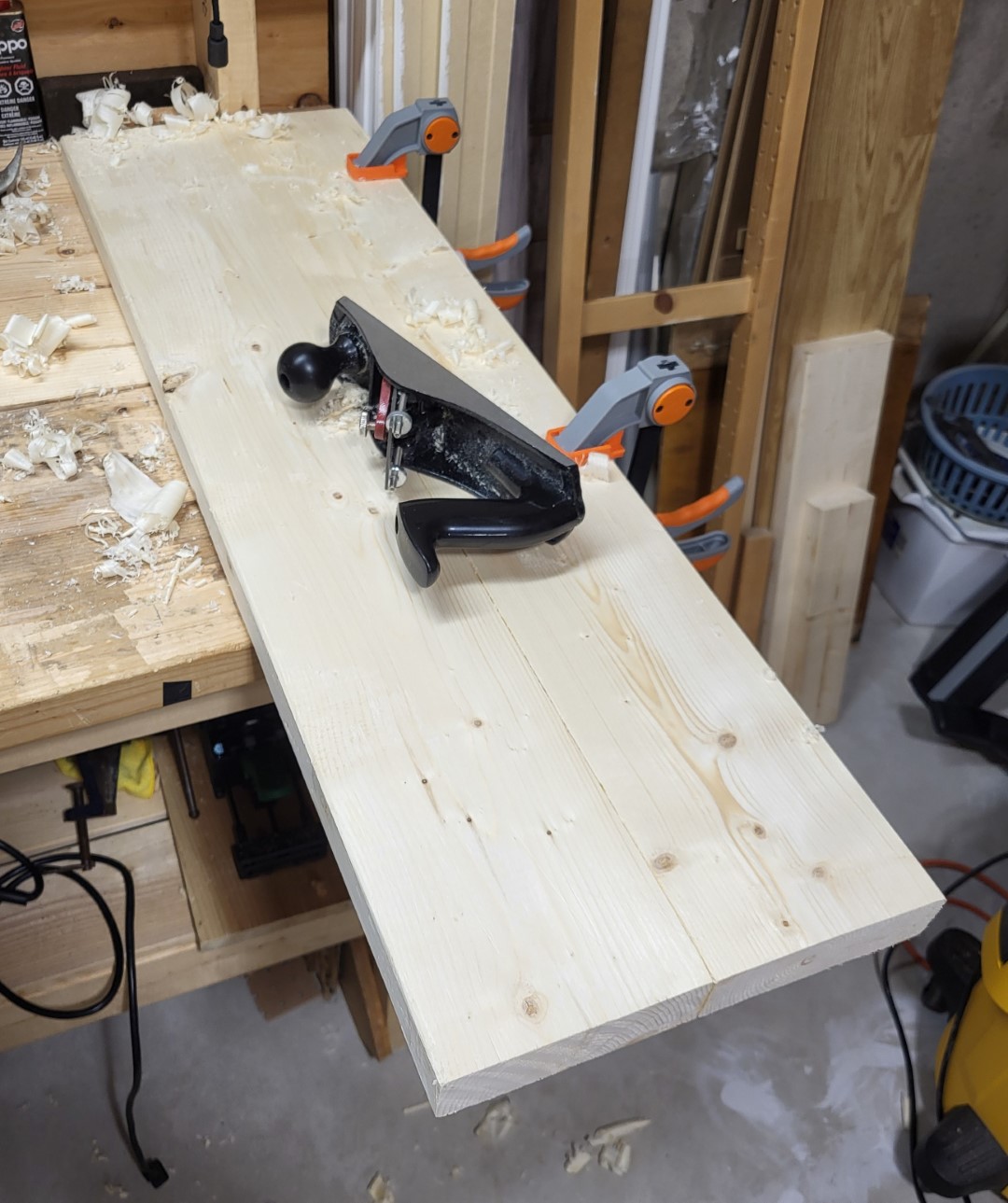
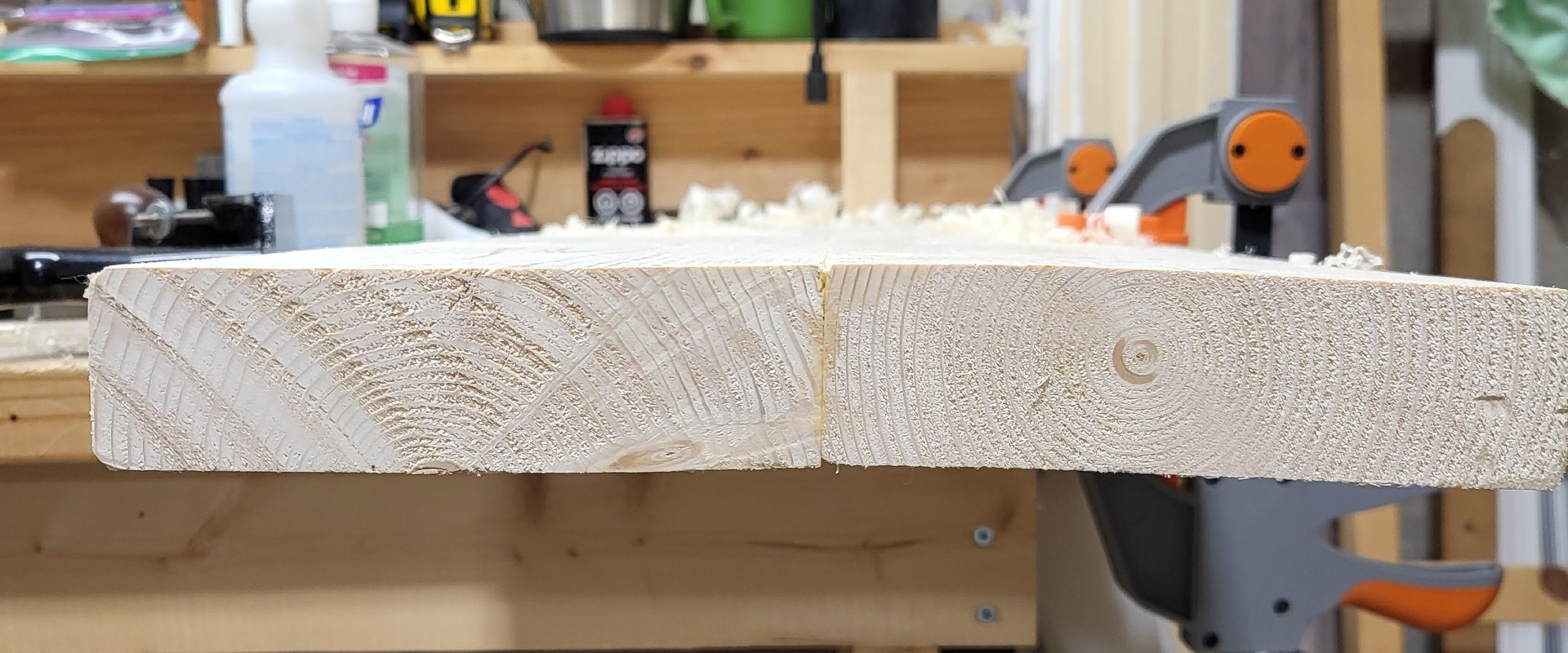
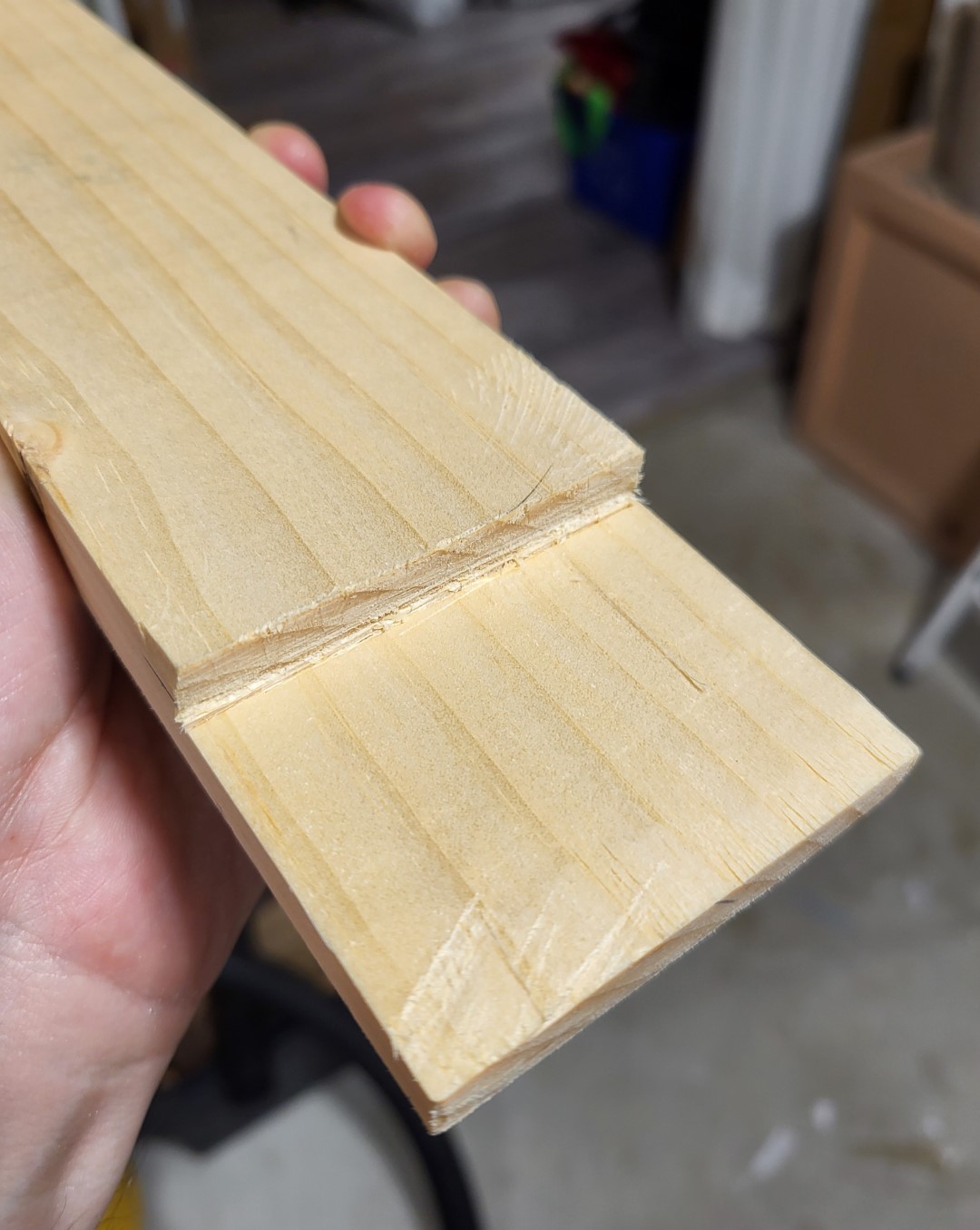
The top of the saw bench is two 2" x 6" boards glued together to make a 12" wide top. This was my very first glue-up! I planed an edge on each board, glued them up, and clamped for a day. First time trying to plane an edge flat, and as you can see here, not exactly flat. I spent a lot of time trying to flatten the glued top with planing. I think I got it close enough, eventually I stopped because it felt like I was planing the whole thing away!
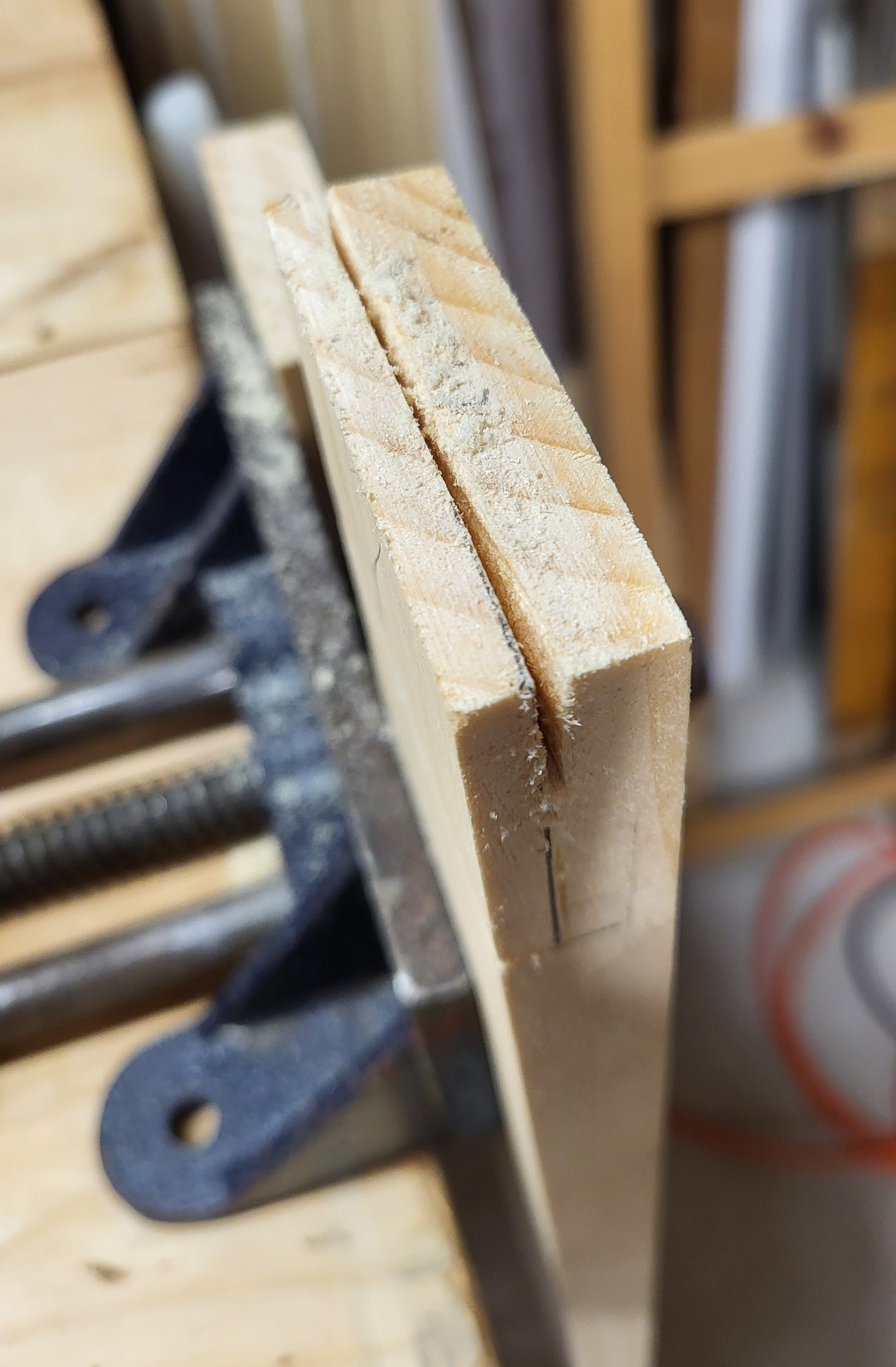
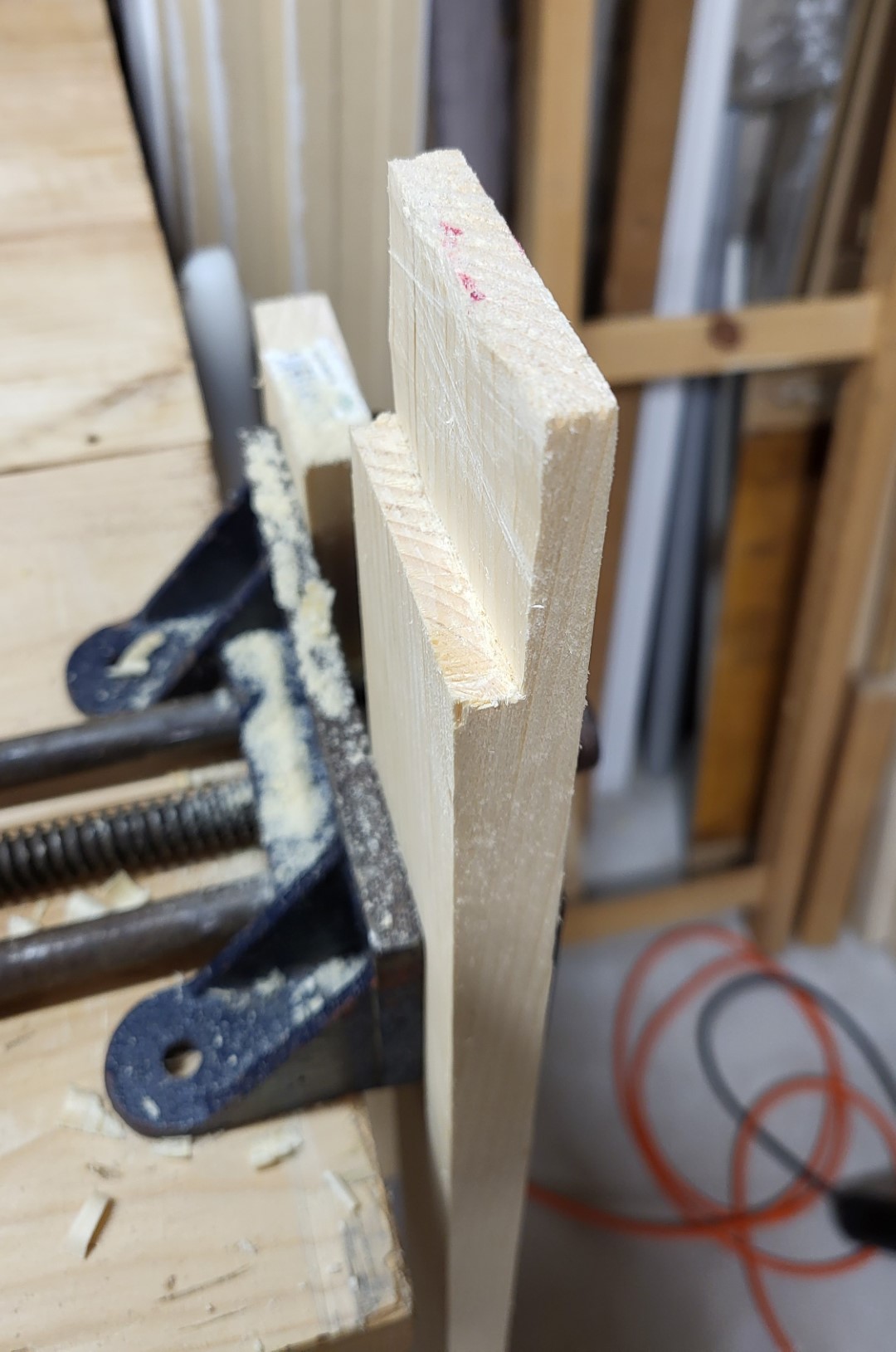
There are two rails that connect the leg assemblies, these are 1" x 3" boards with a half-lap joint to connect them to the legs. My first half-lap joints! Some careful measuring, cuts with a back saw, and some chiselling to smooth the faces and straighten them up. These turned out really well, very happy with how these looked and fit.
Each leg assembly has an angled batten, I cut these from a piece of pine. Here is a batten and all the wood cut to size, ready to assemble.

This was a fun part of the build, and a new tool opportunity. The legs are angled out to the sides. In order to trim the top of the leg flat with the top of the saw bench, I used a mitre guage to measure the angle from the batten, then transfer that angle to the leg. Cut along the transferred line, and I had a perfectly flush top of the leg.


Once all the legs were trimmed, I assembled with a line of glue and screws.
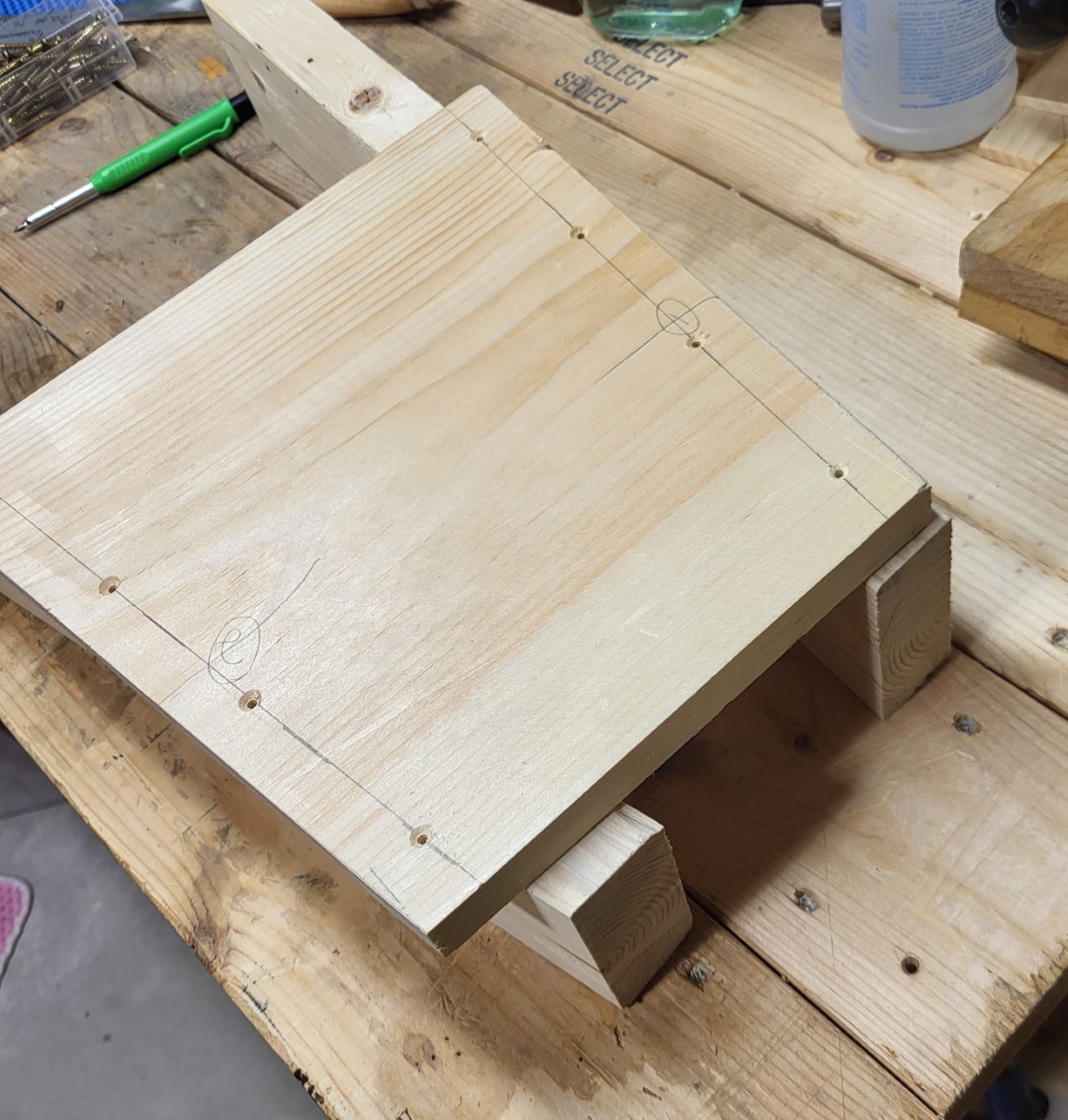
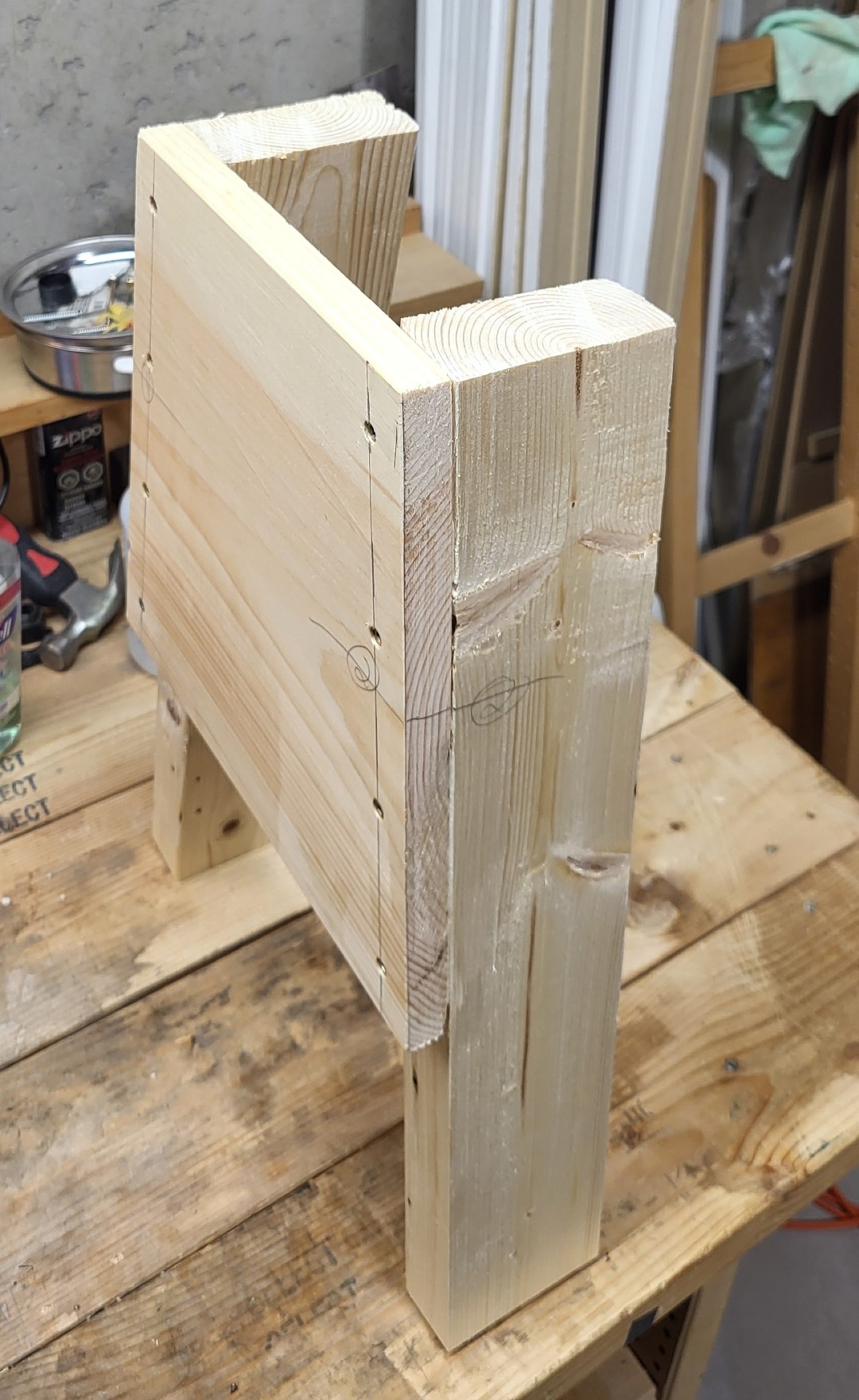
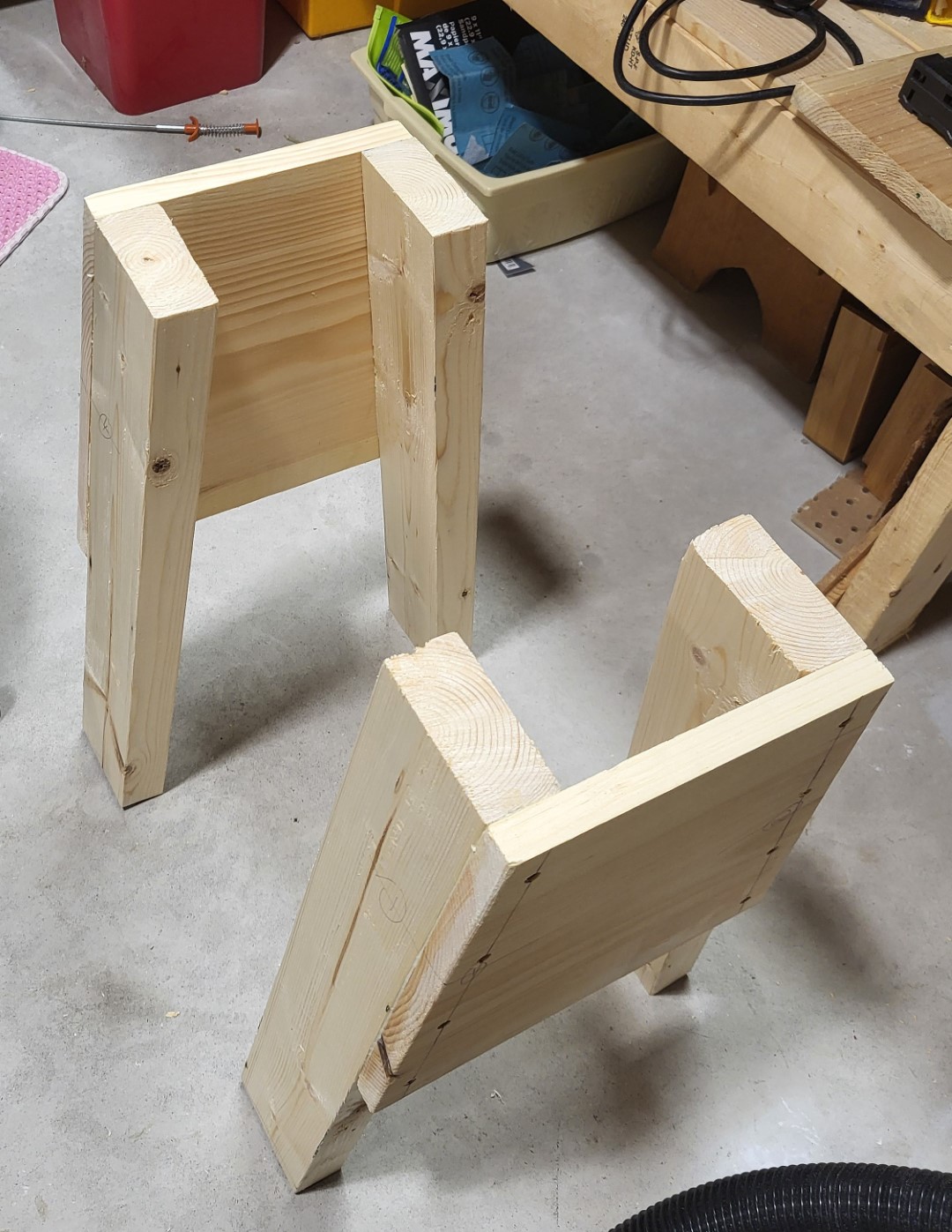
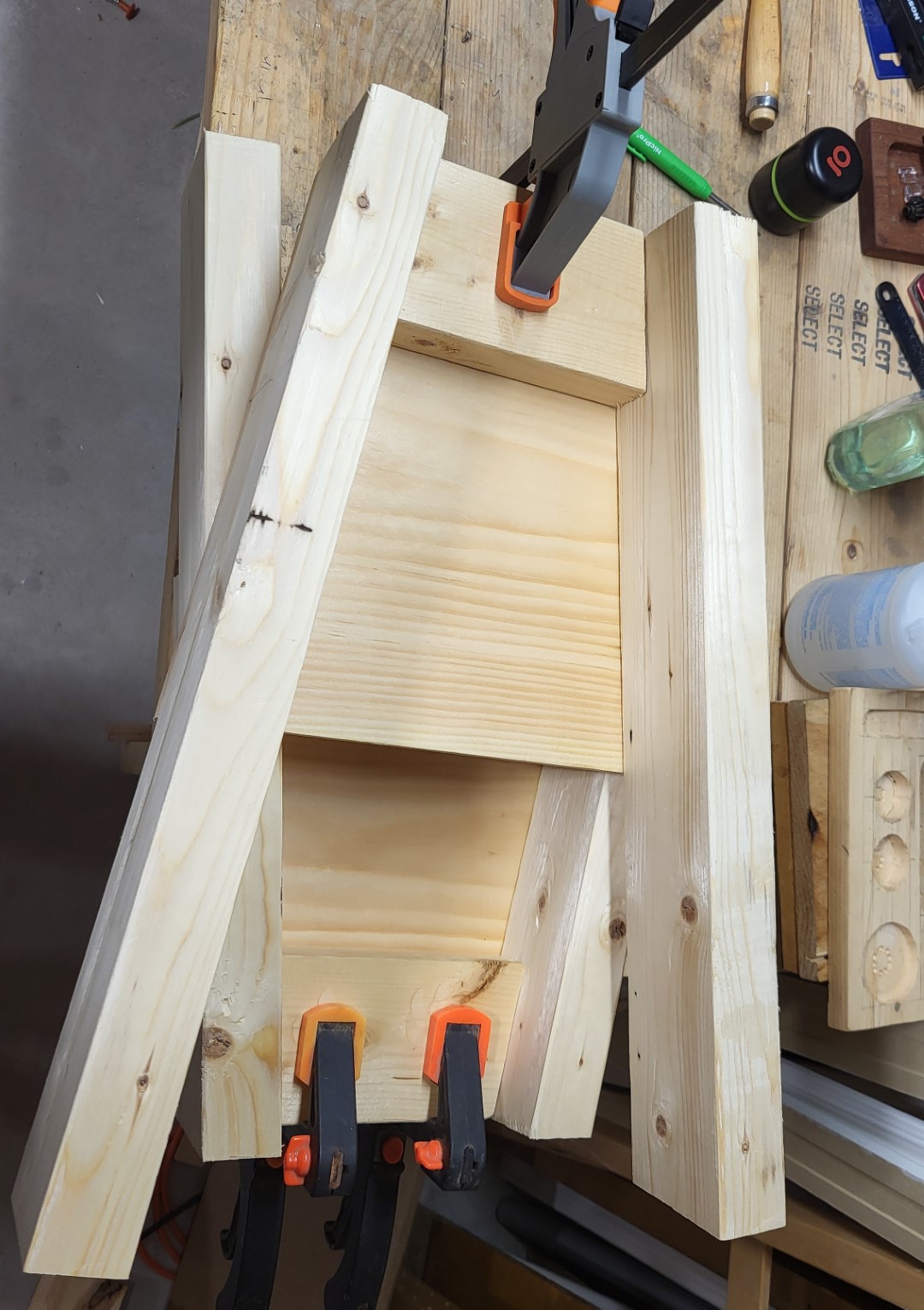
The final piece of the leg assembly is this wedge piece against the batten. This is so the top of the bench can be screwed in to a side grain, instead of the end grain of the legs. Rex talks about it in the video. This piece I would have done a bit differently, as I had one wedge that was a bit loose, and one that was very much too tight. The loose one was easy - pushed it up until tight and planed off the bit that was sticking out. The tight one I had to hammer and force in, and I don't think that force against the rest of the assembly does it any favours. These are just attached with some glue.

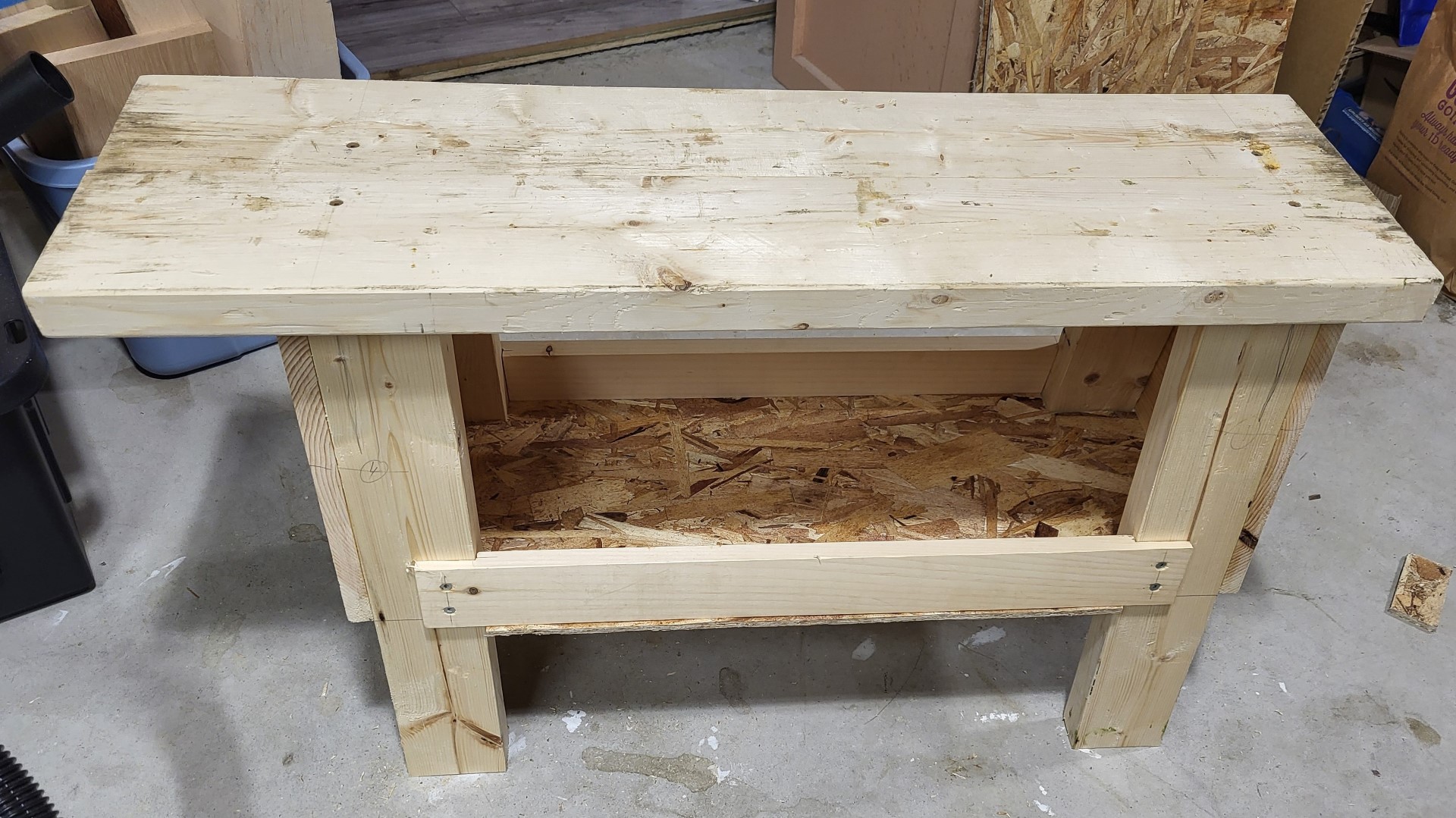
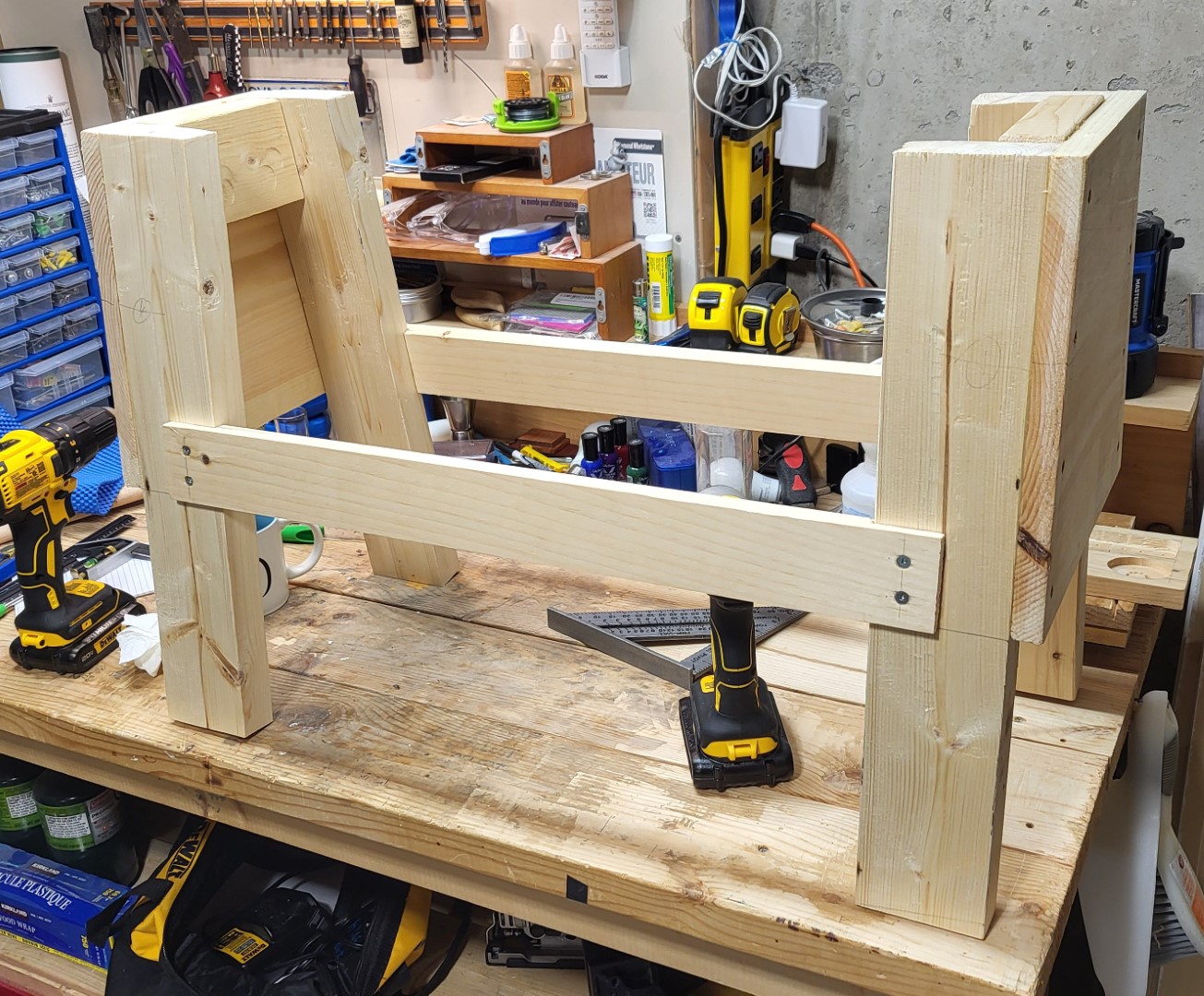
Next, attached the leg assemblies with the half-lap rails. The bench feels pretty sturdy here already, and looks great! And then, attached the top. This is pretty much done!
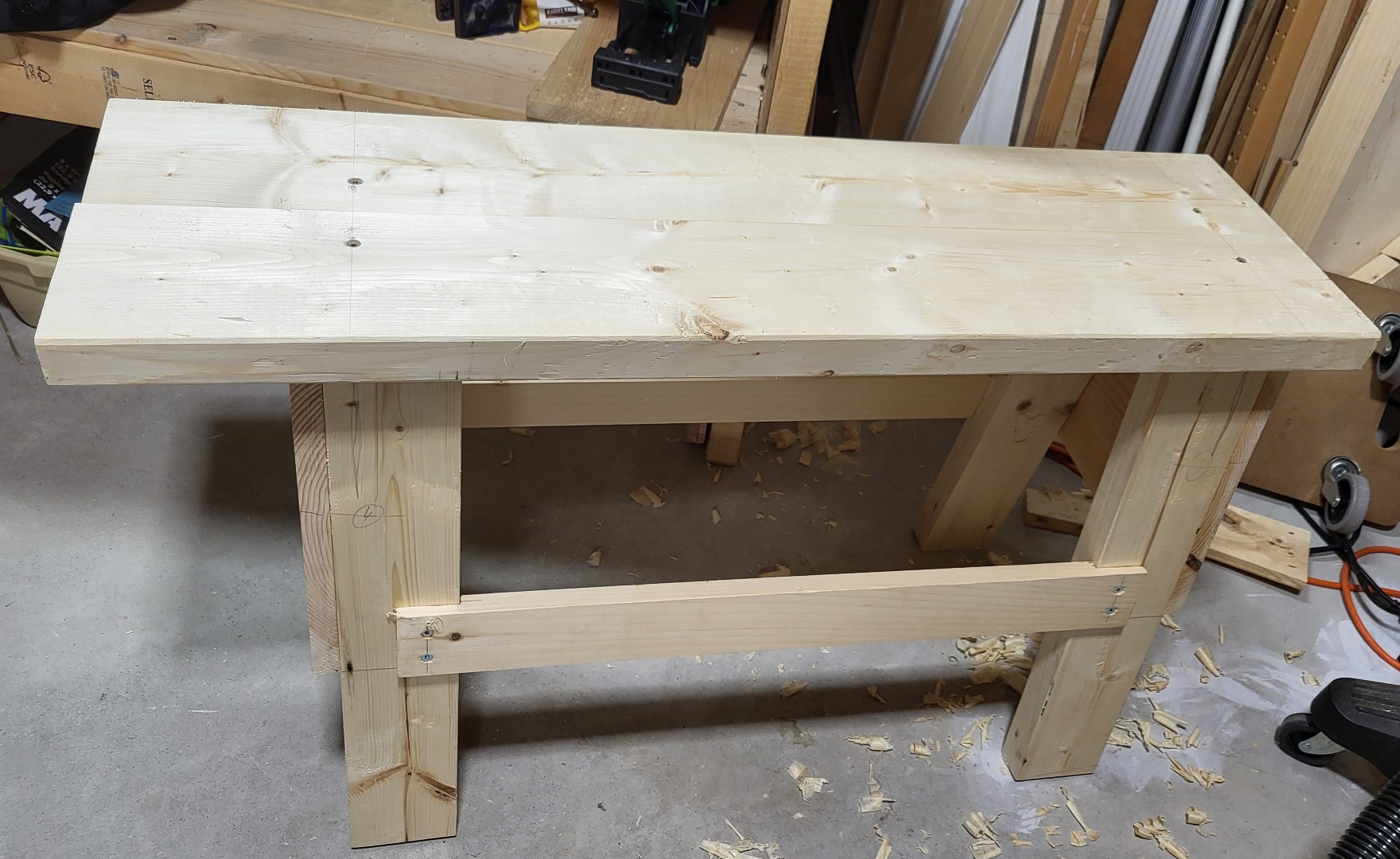
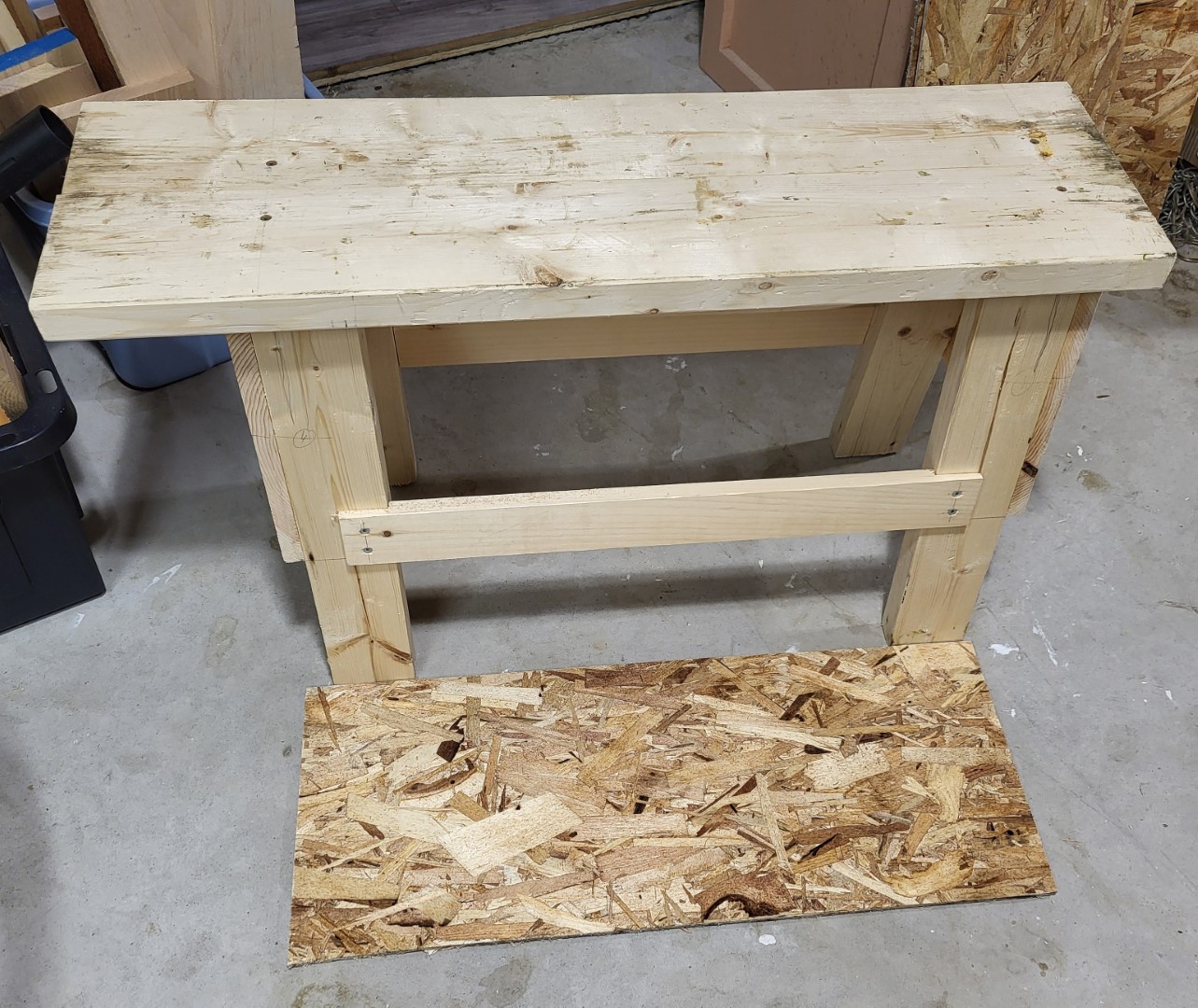
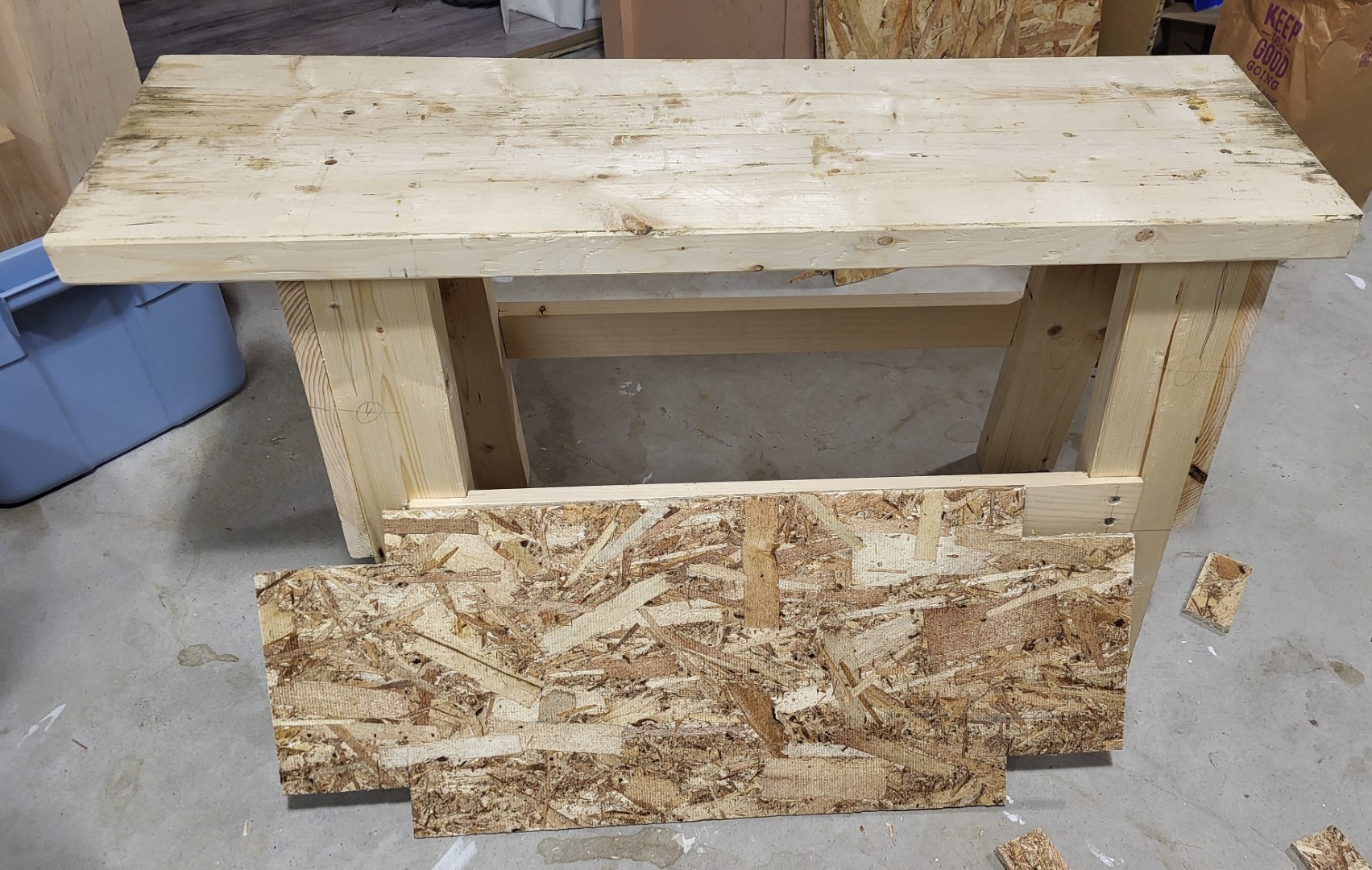
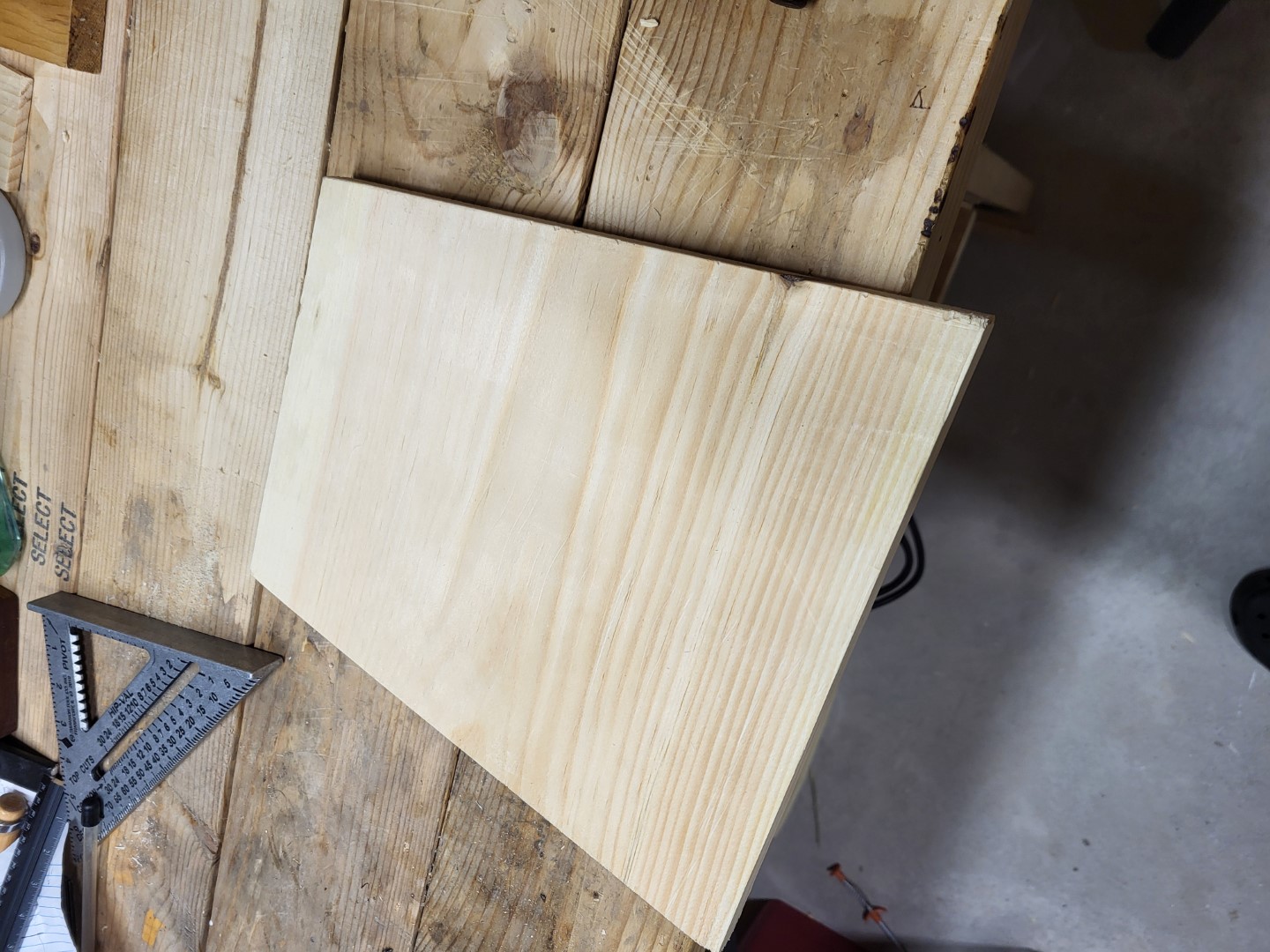
The final touches are to level the bottom of the legs and add a panel to the bottom of the battens and rails, to create a storage tray. Trimming the bottom of the legs was straight forward, but for both that and the notches in the tray bottom, I wish I just used the jigsaw. Hand sawing the MDF plywood was a pain. Great final product though. I'll make another one of these some time for sure.