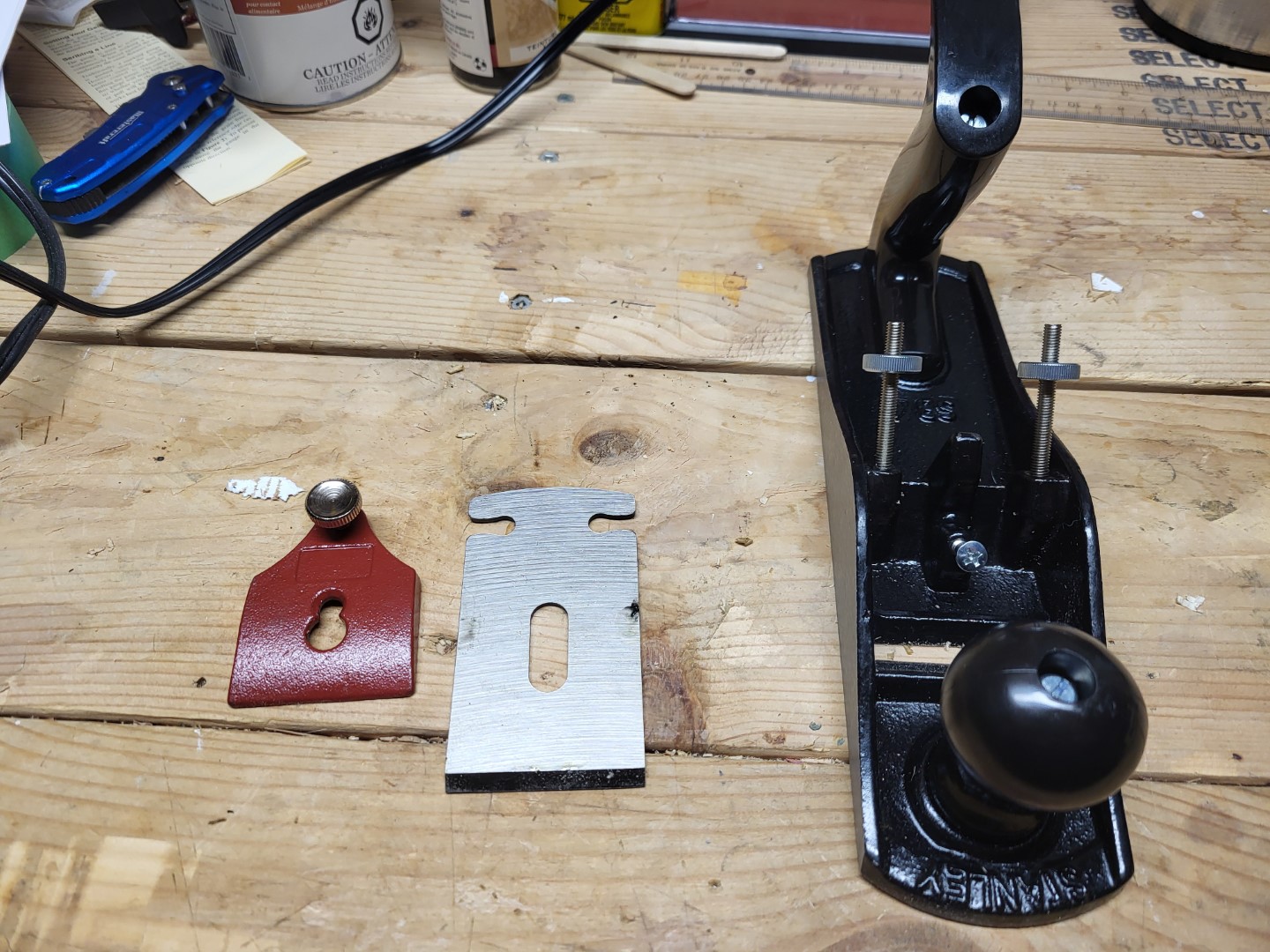
A big part of my woodworking journey so far has been research - tools and how to use them being a big part of that. I picked up a low-end hand plane (the Stanley No. 4 Adjustable 2-inch) with the intention to go through the "hand plane prep" process. Best to practice on the low end before spending any serious money on a top quality plane.
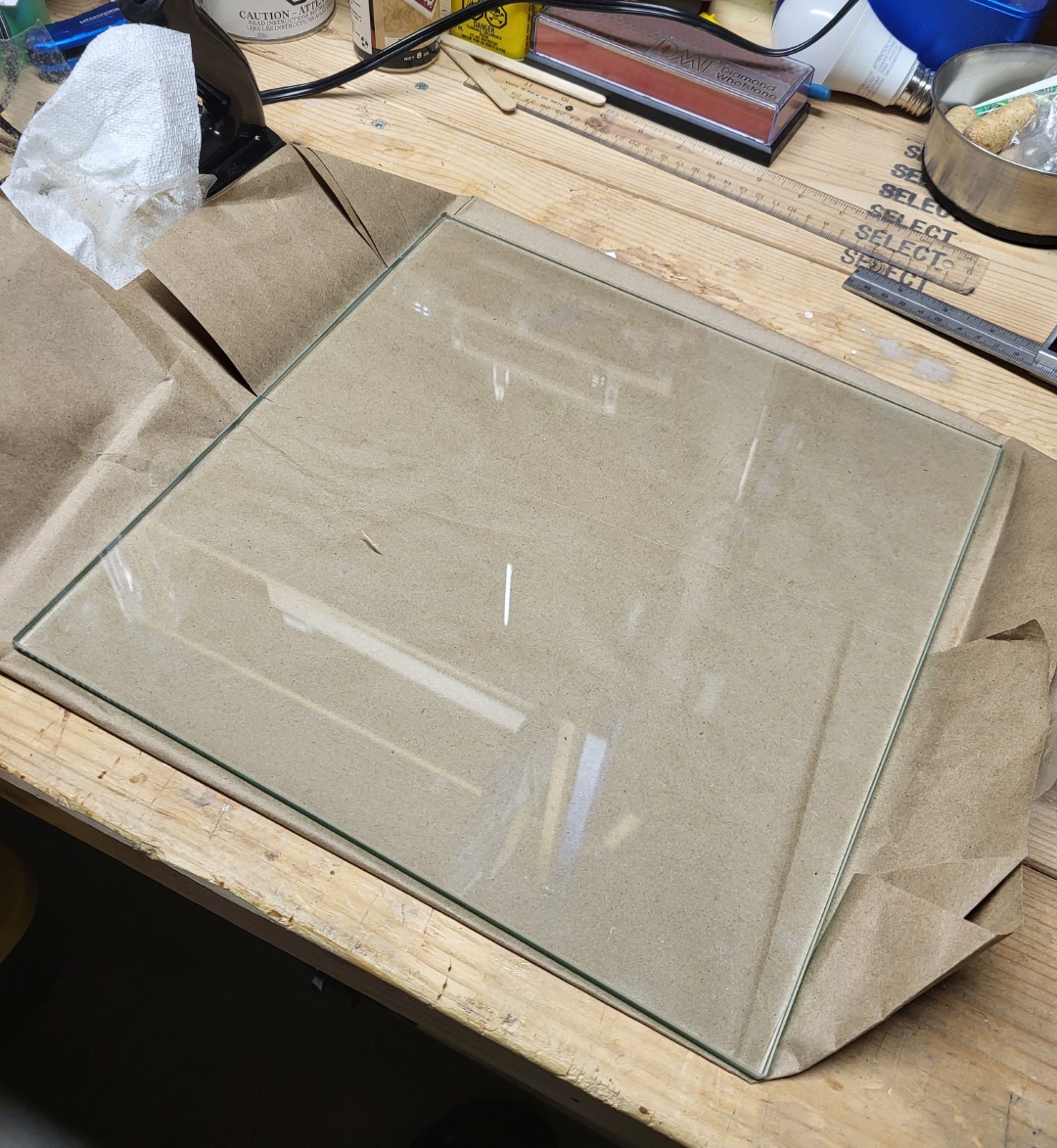
The plan here is to dismantle the plane, flatten and sharpen the blade, and flatten the sole. I took care of the blade with a mix of wet stones and one diamond sharpening stone I have (turned out really well). The sole of the plane, I wanted to go with the glass plate and sandpaper method, as this seemed the most reliable, and straight forward. First obstacle? A good sized piece of perfectly flat glass. Where the heck am I going to get that? Good ol' KC to the rescue - a family friend who works with glass and very kindly sourced me a perfect 1 foot squared piece of thick glass, and even rounded the edges - what a champ!
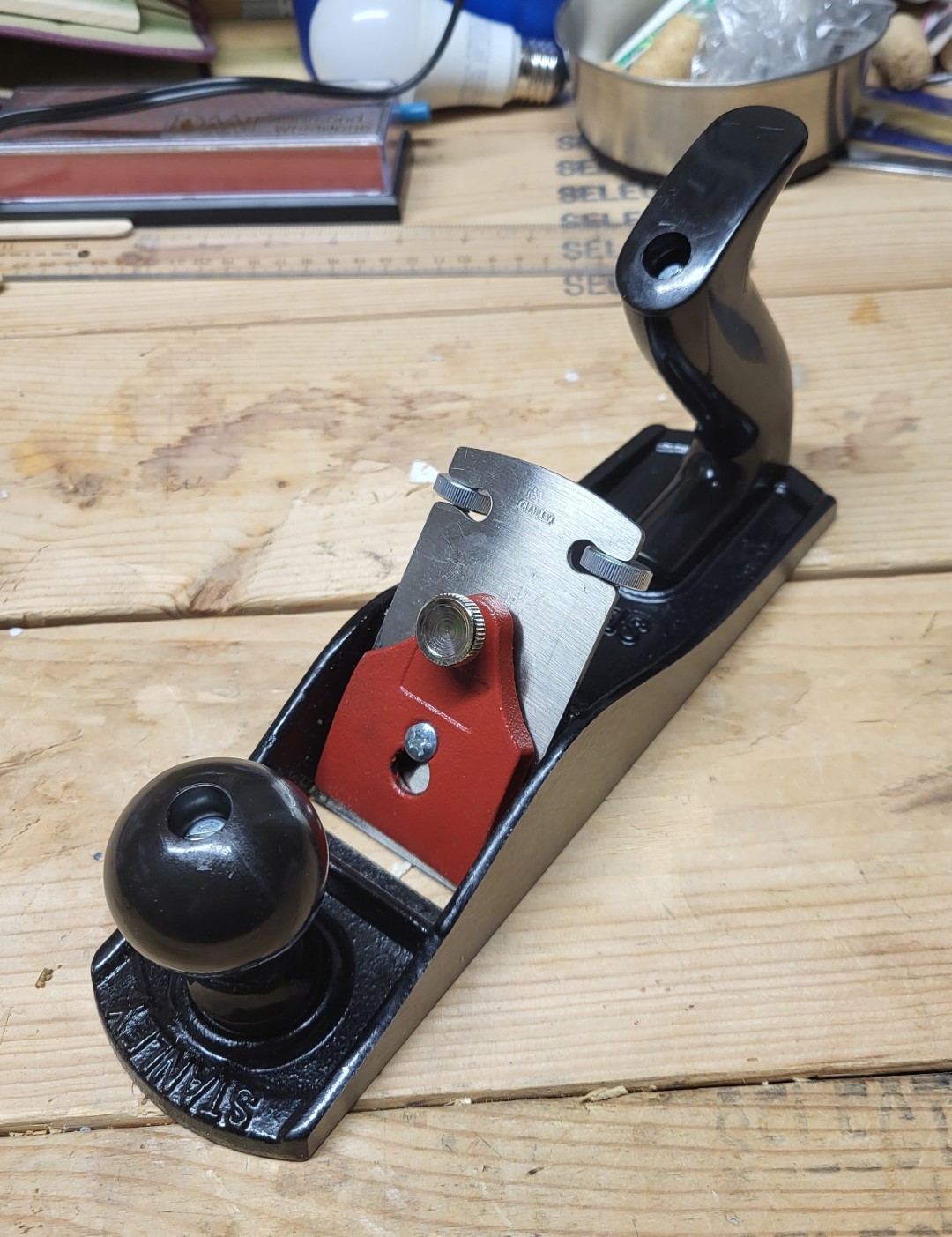
Here is the Stanley plane. Bit of a story here, but the jist of it is, I way overpaid for this on Amazon, when I could have picked it up from Home Depot at about a third the cost. Lesson learned - shop on Amazon for the variety, price check everywhere else before the purchase.
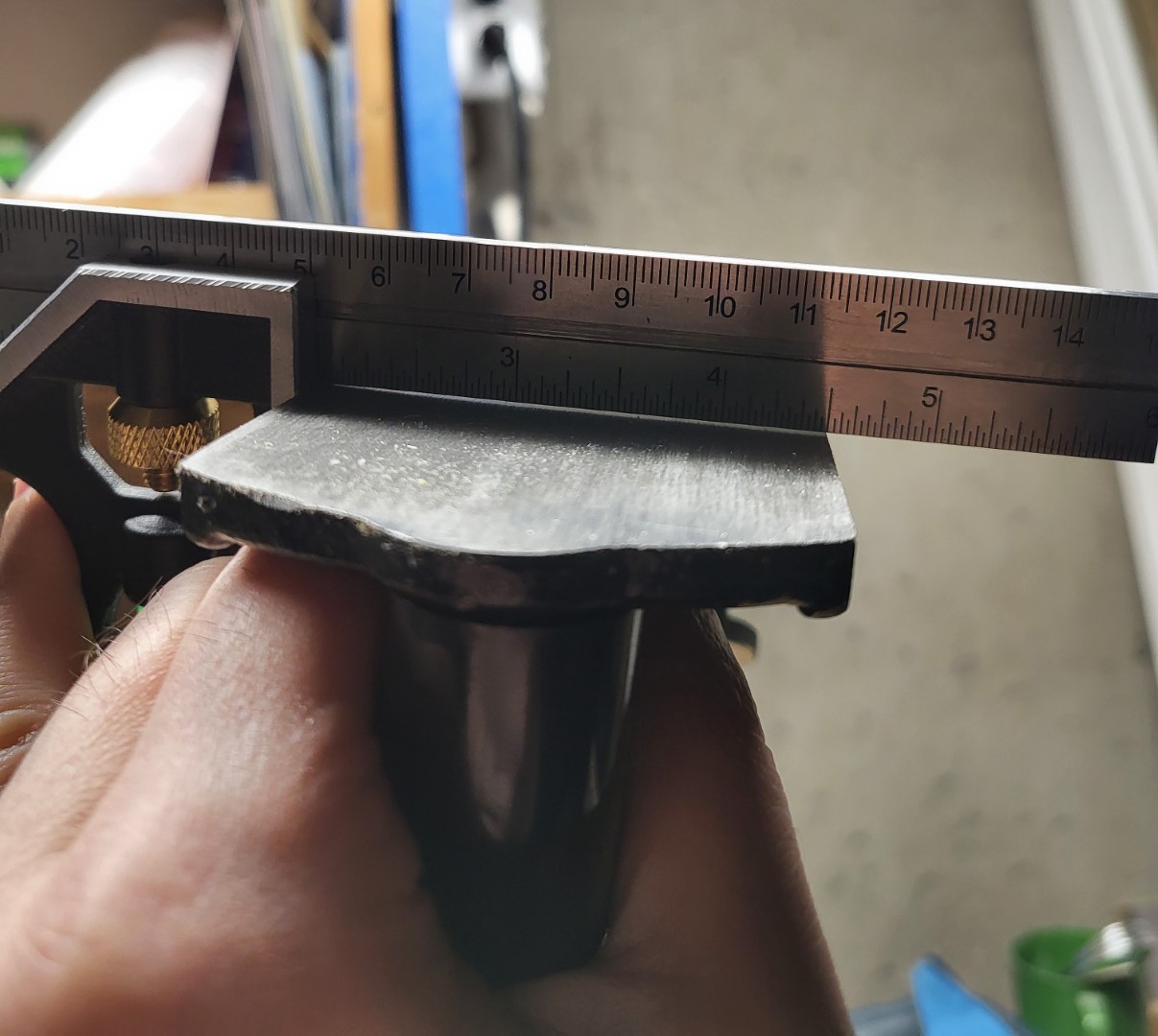
For most (all?) planes, from the factory they are rarely perfectly flat, which is important, as the sole of the plane runs along your wood, and you want full contact on the sole with the wood, for a flat, even cut. A straight edge here easily showed the high edges at this point.
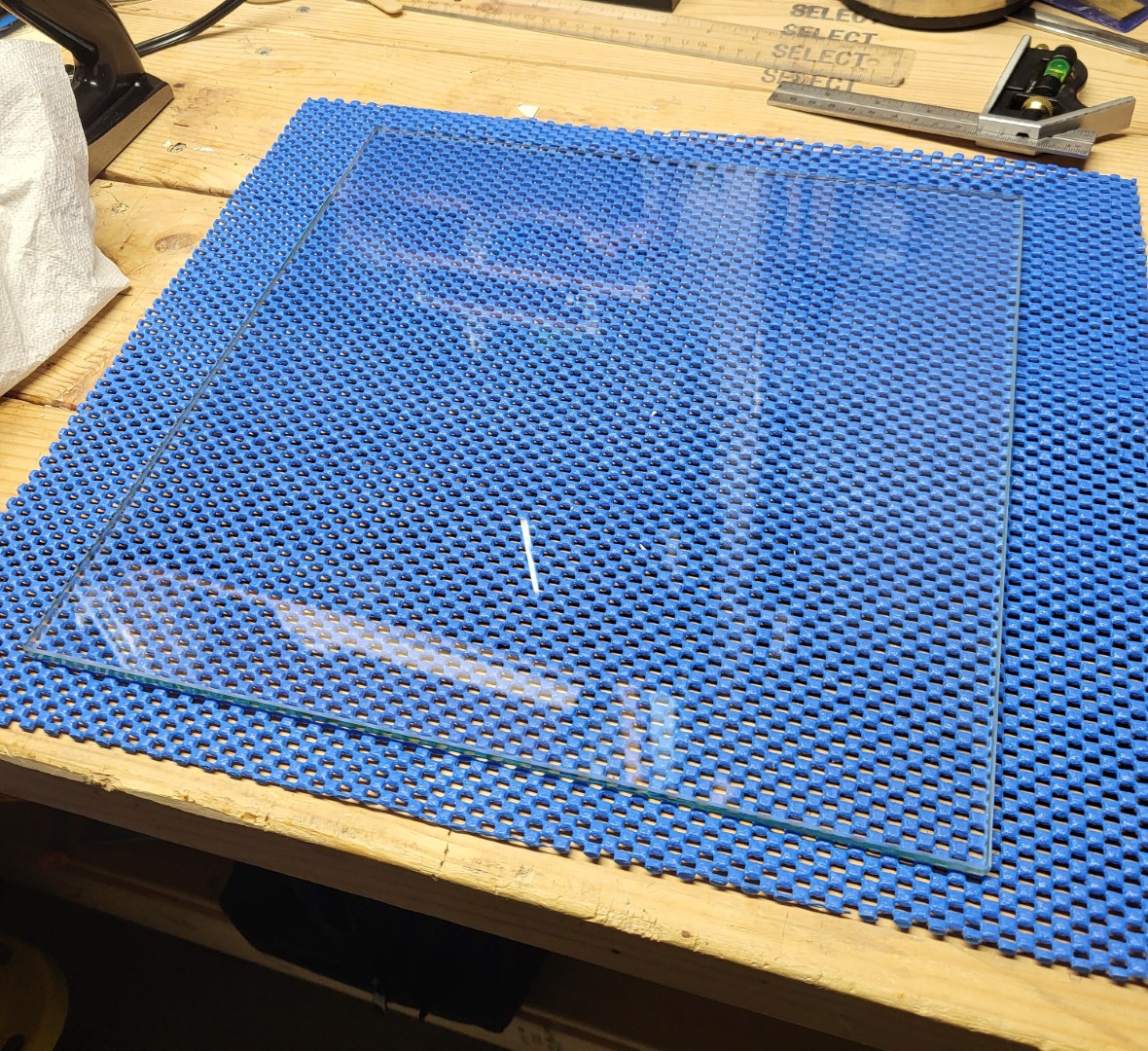
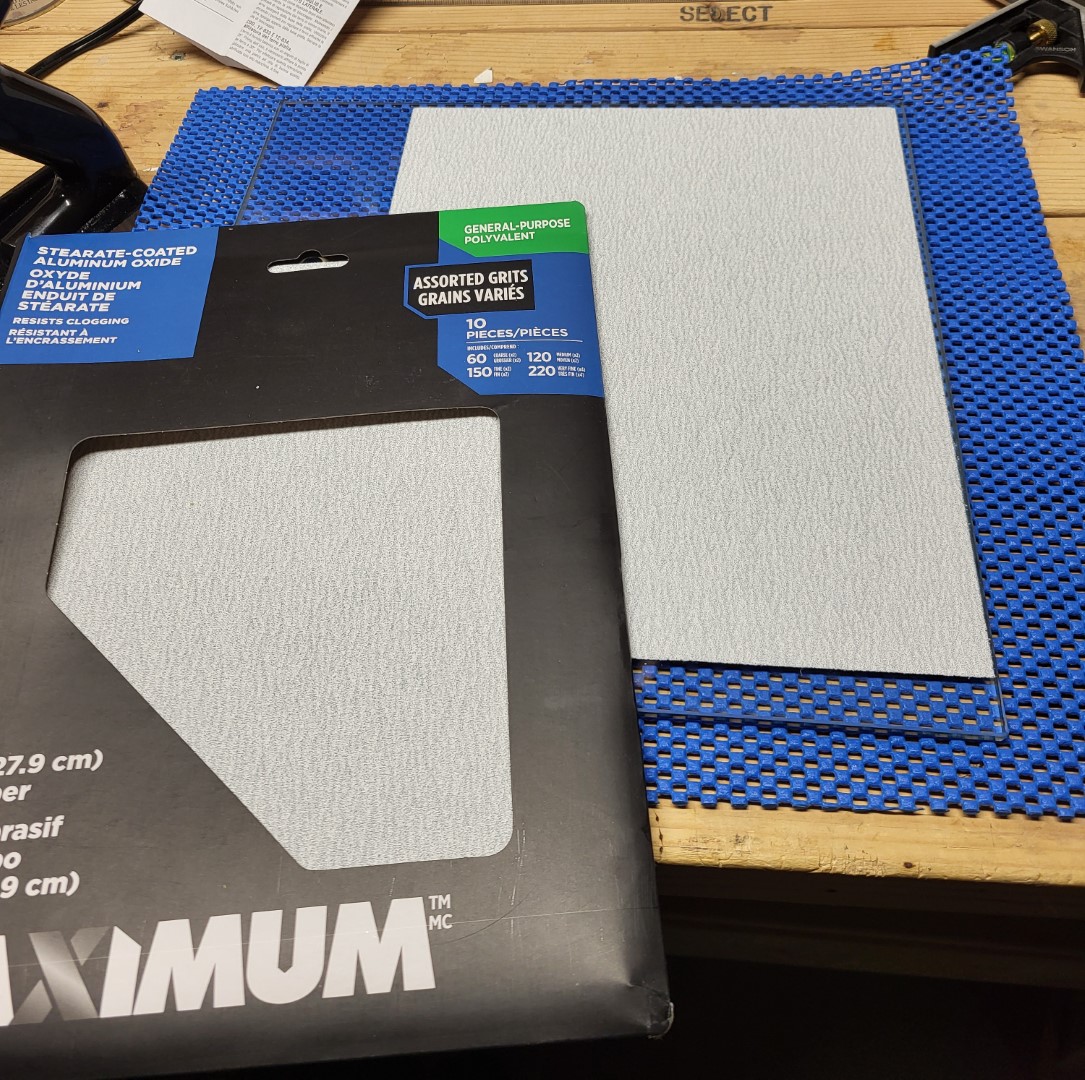
Enter the perfectly flat square of glass. I put it on some non-slip rubber padding and glued some sandpaper to it using spray adhesive. After all was said and done, I think I went through about 3 sheets of sandpaper. Started with 120 grit, found that to be too slow, went with 60 grit which was pretty good, then finished at the end with the 120 again.
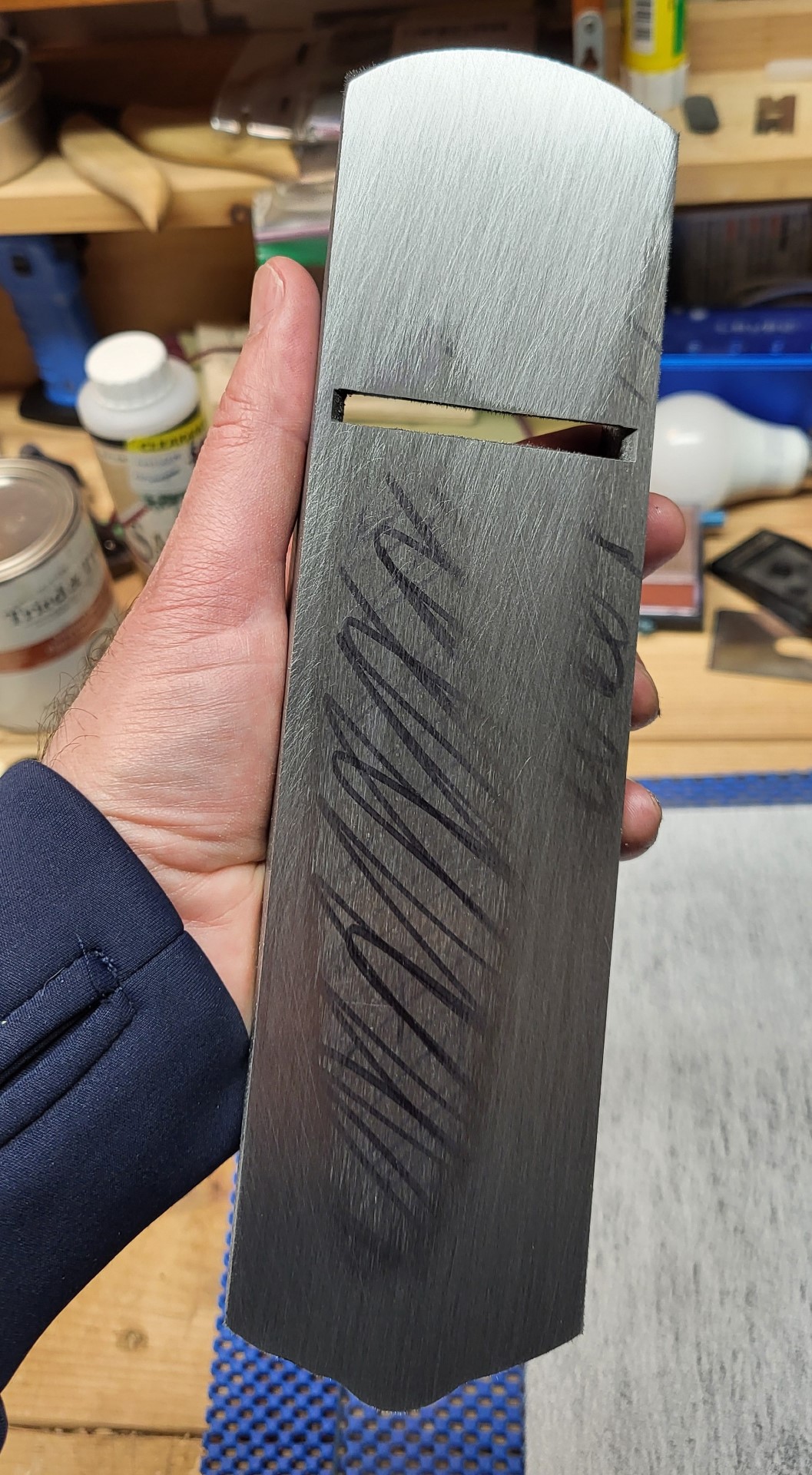
Here is the bottom of the plane, right out of the box. Then, after a few passes on the sandpaper, you can already see where the high points are at the top (toe) and bottom (heel), where the sandpaper is taking off the factory metal and leaving a shine.
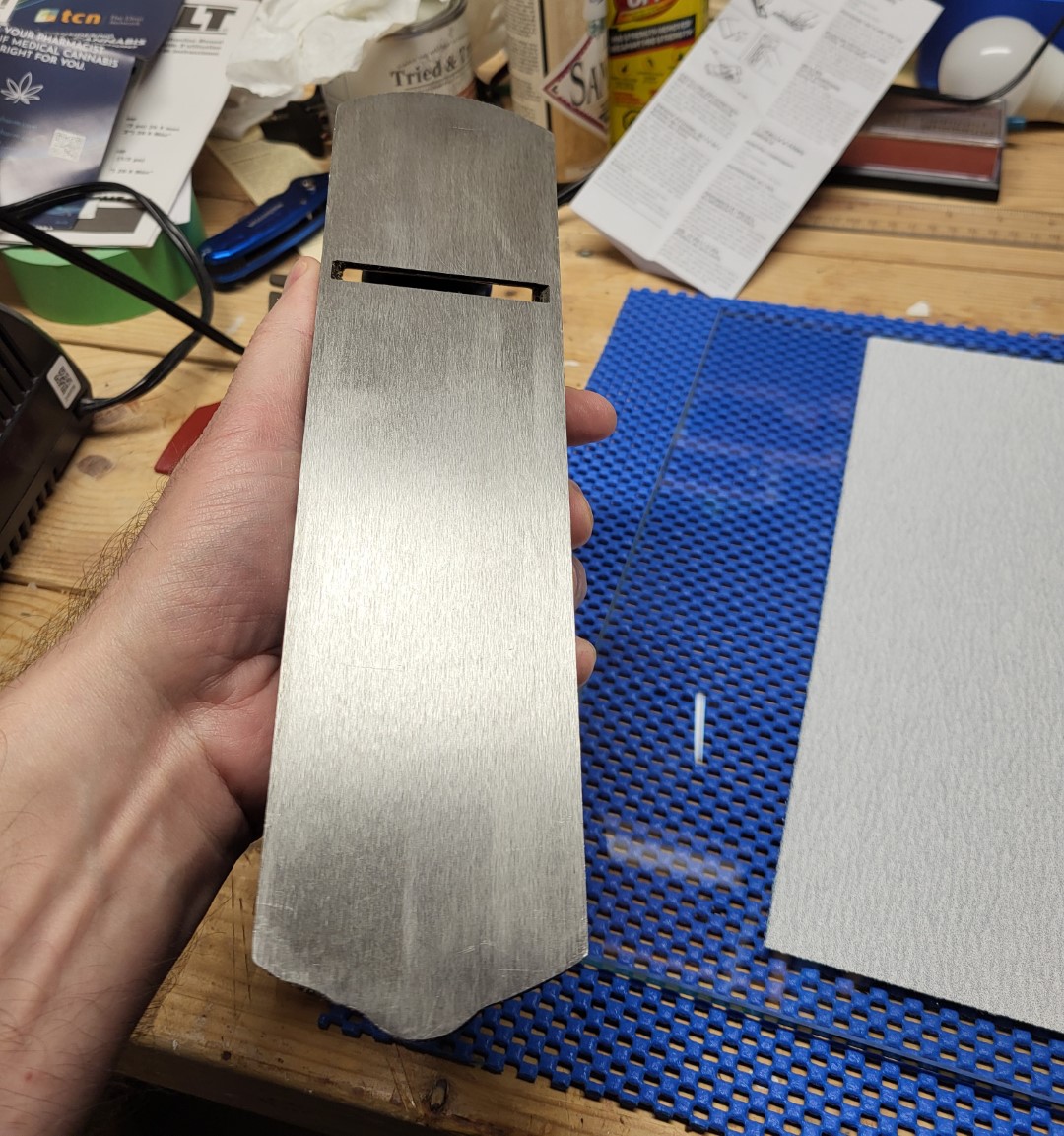
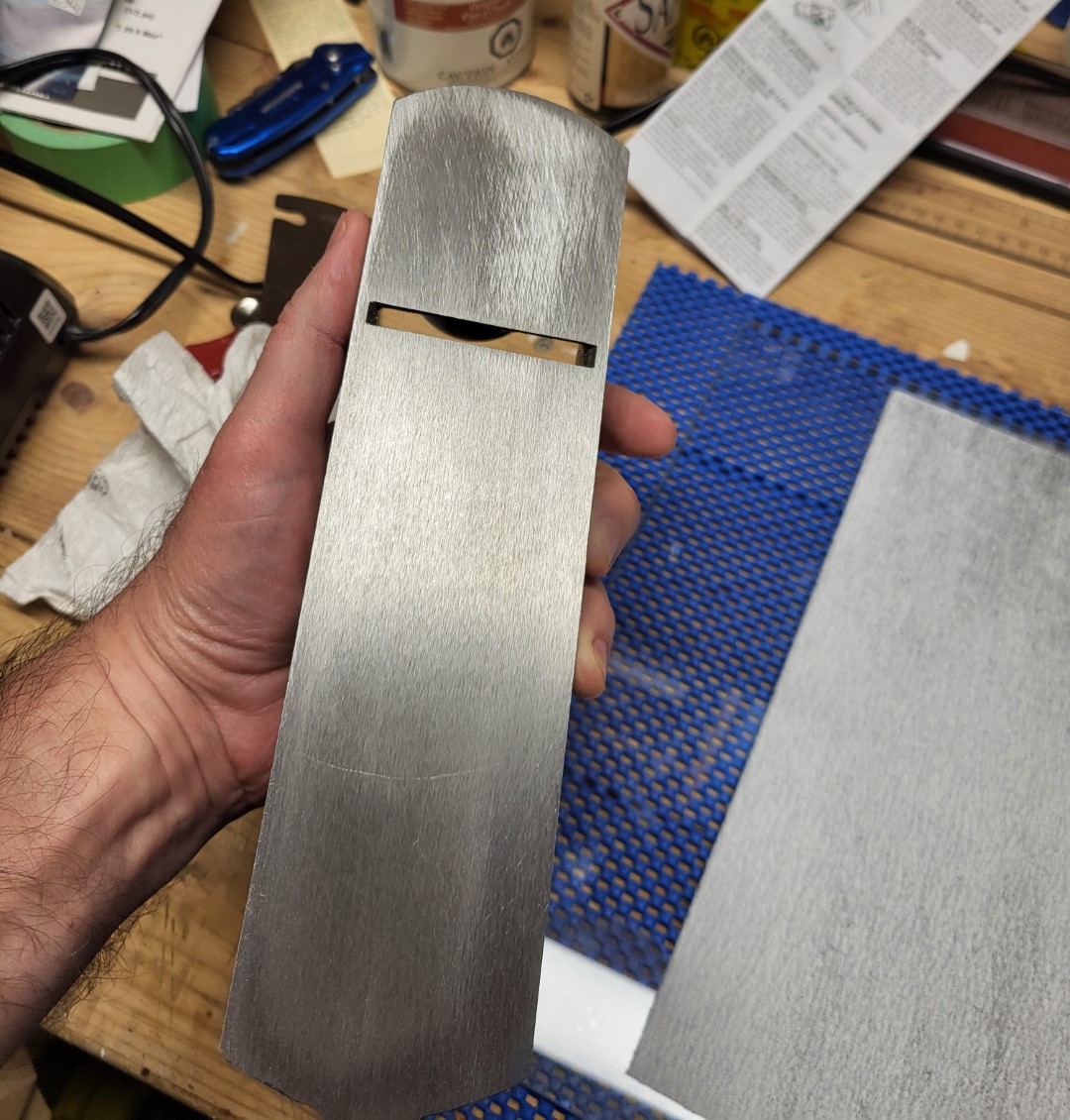
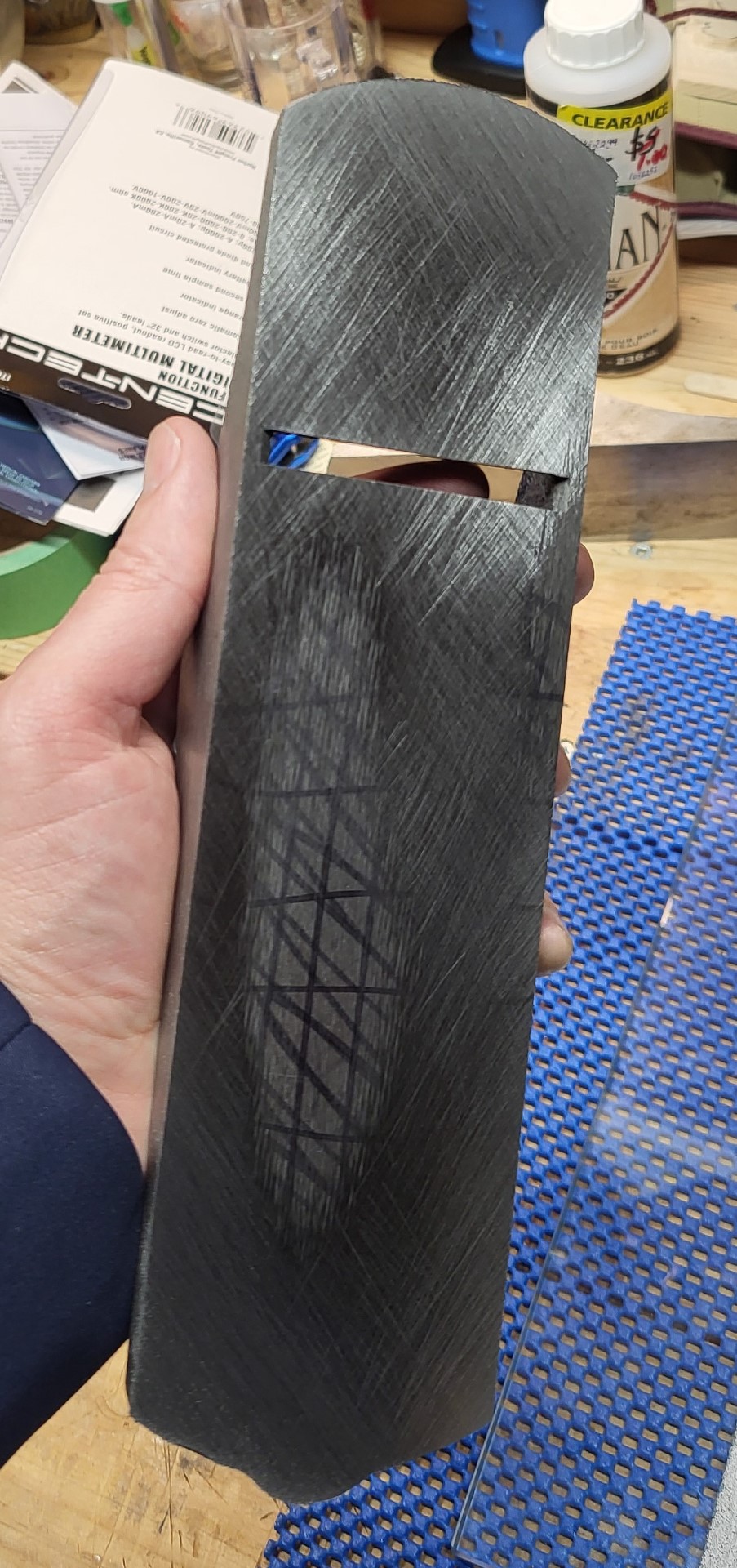
I used a black marker to better show where the work is being done. A few more passes and you can see that the sandpaper on the flat glass is doing the job - sanding down the high points on the sole on the way towards perfectly flat.
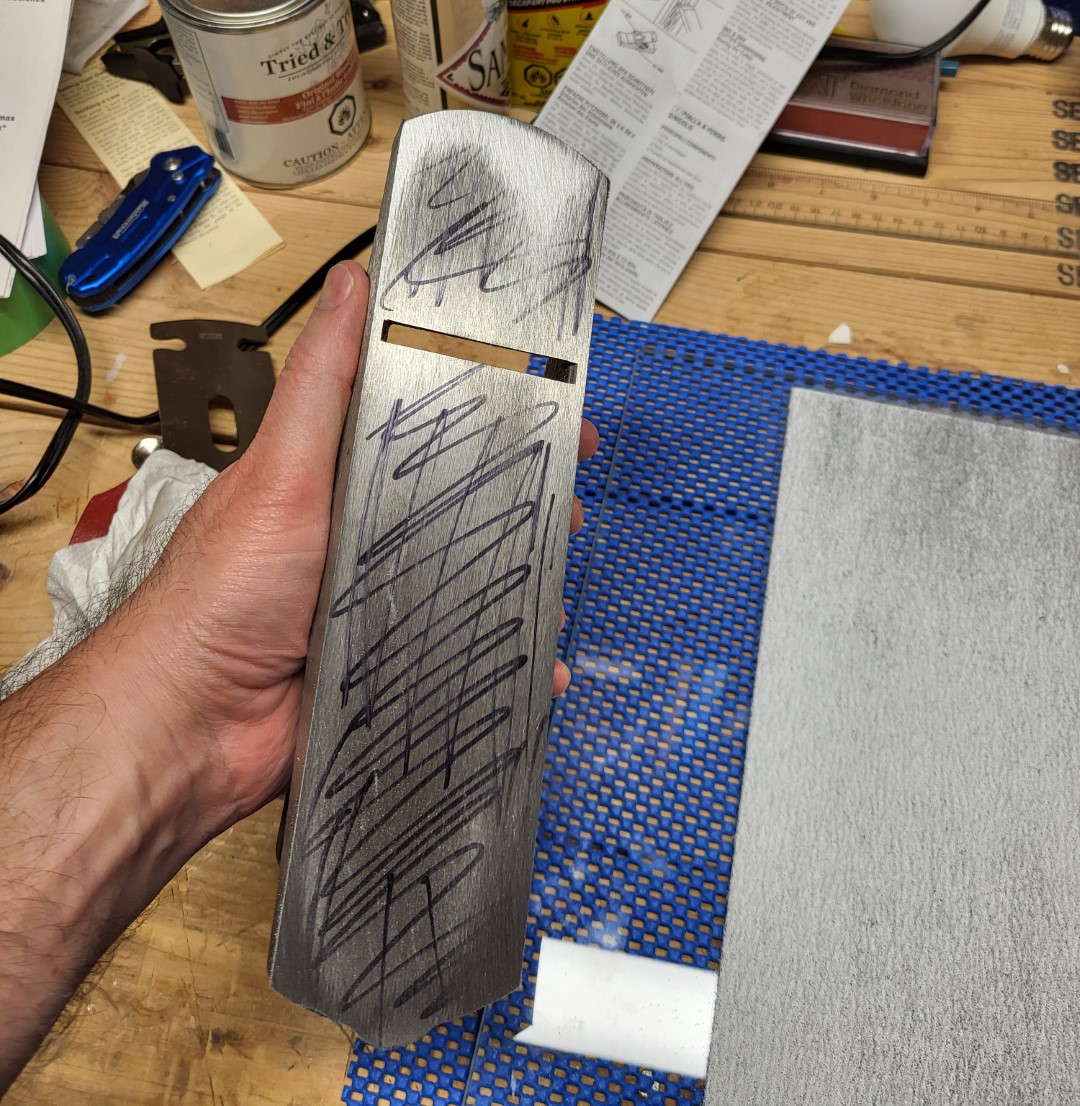
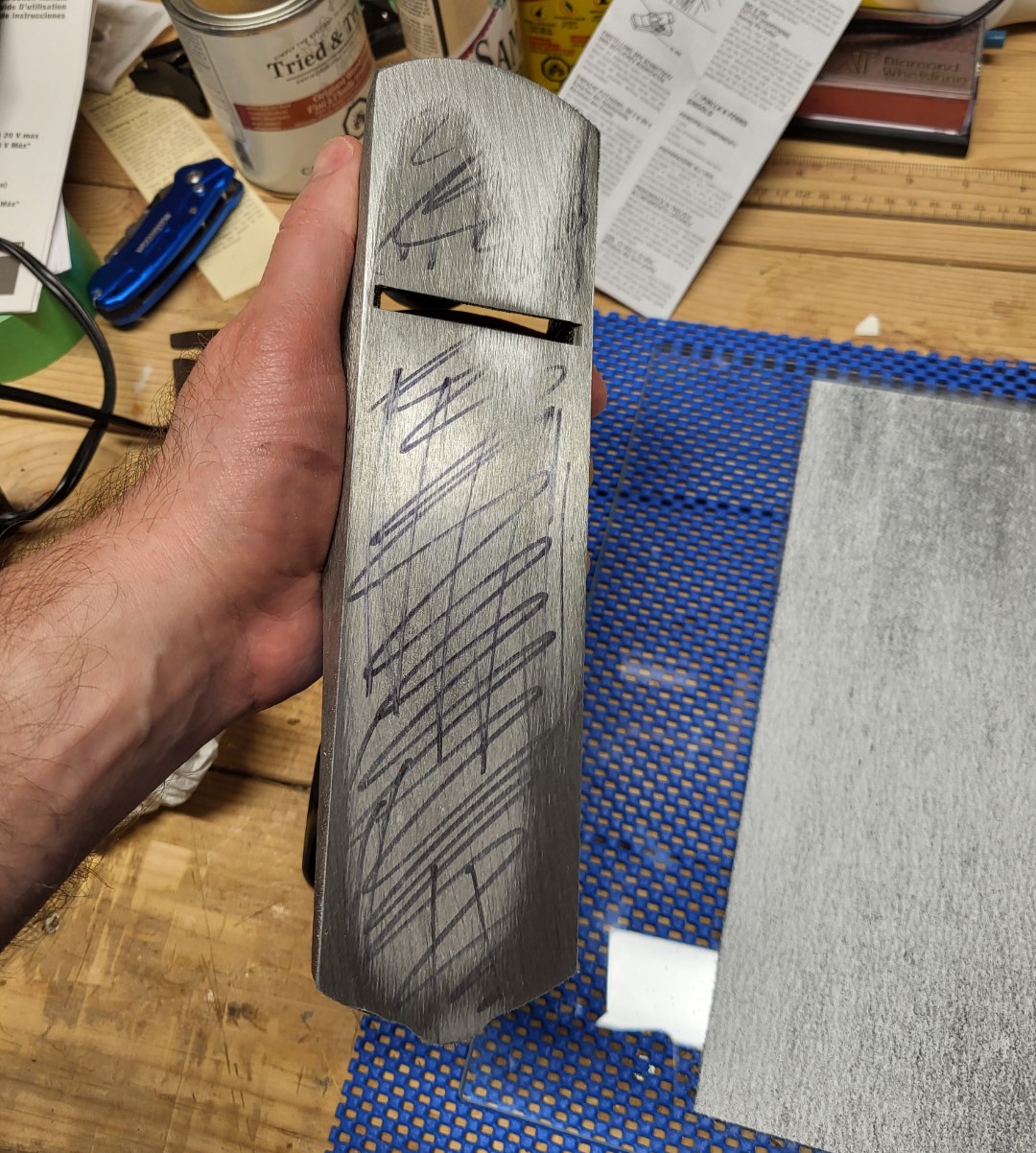
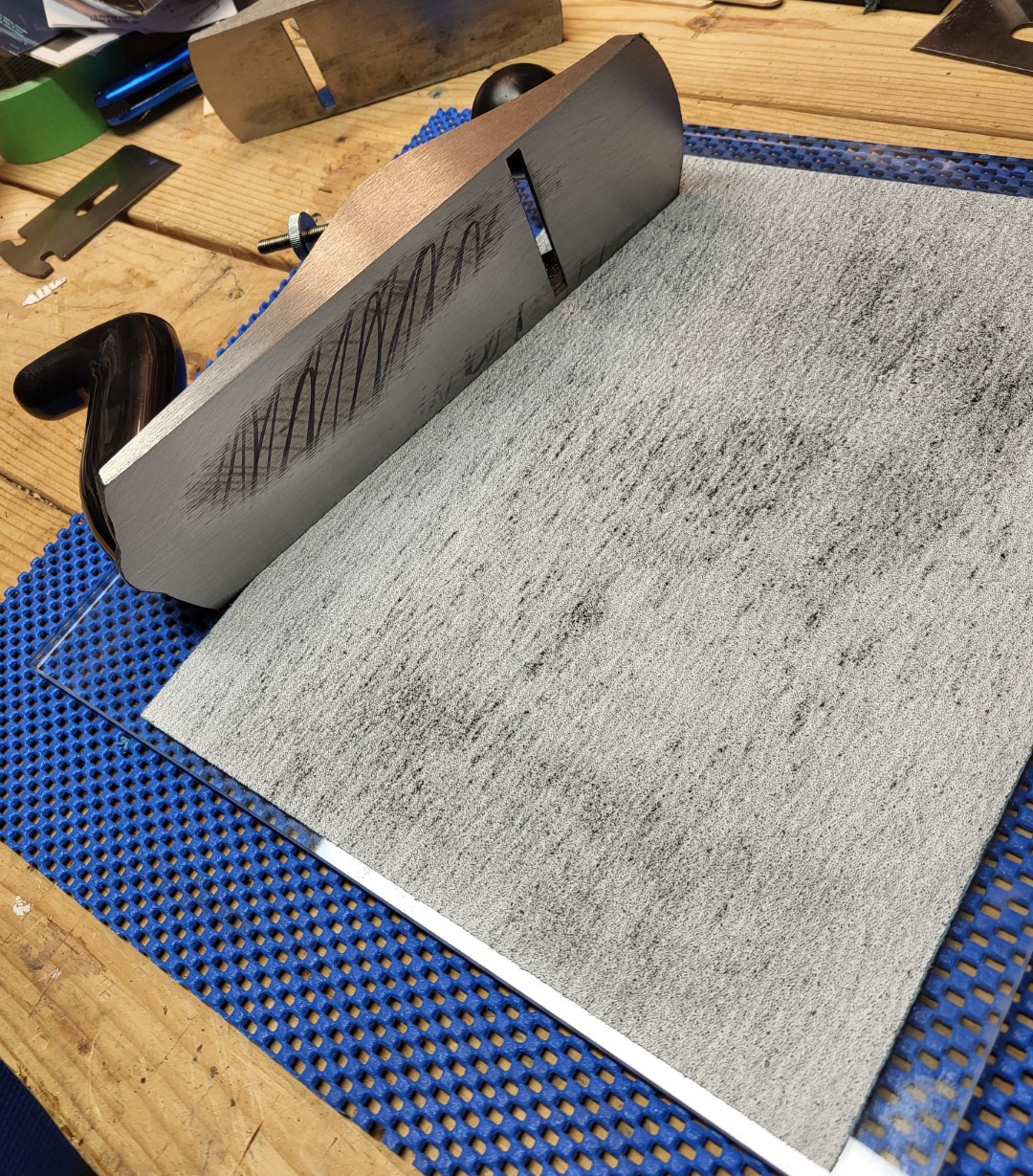
Here's a progression of the sanding work. This was a good workout - a lot of hard sanding, moving the plane around on the sheet of sandpaper, vacuuming out the black dust every now and then.
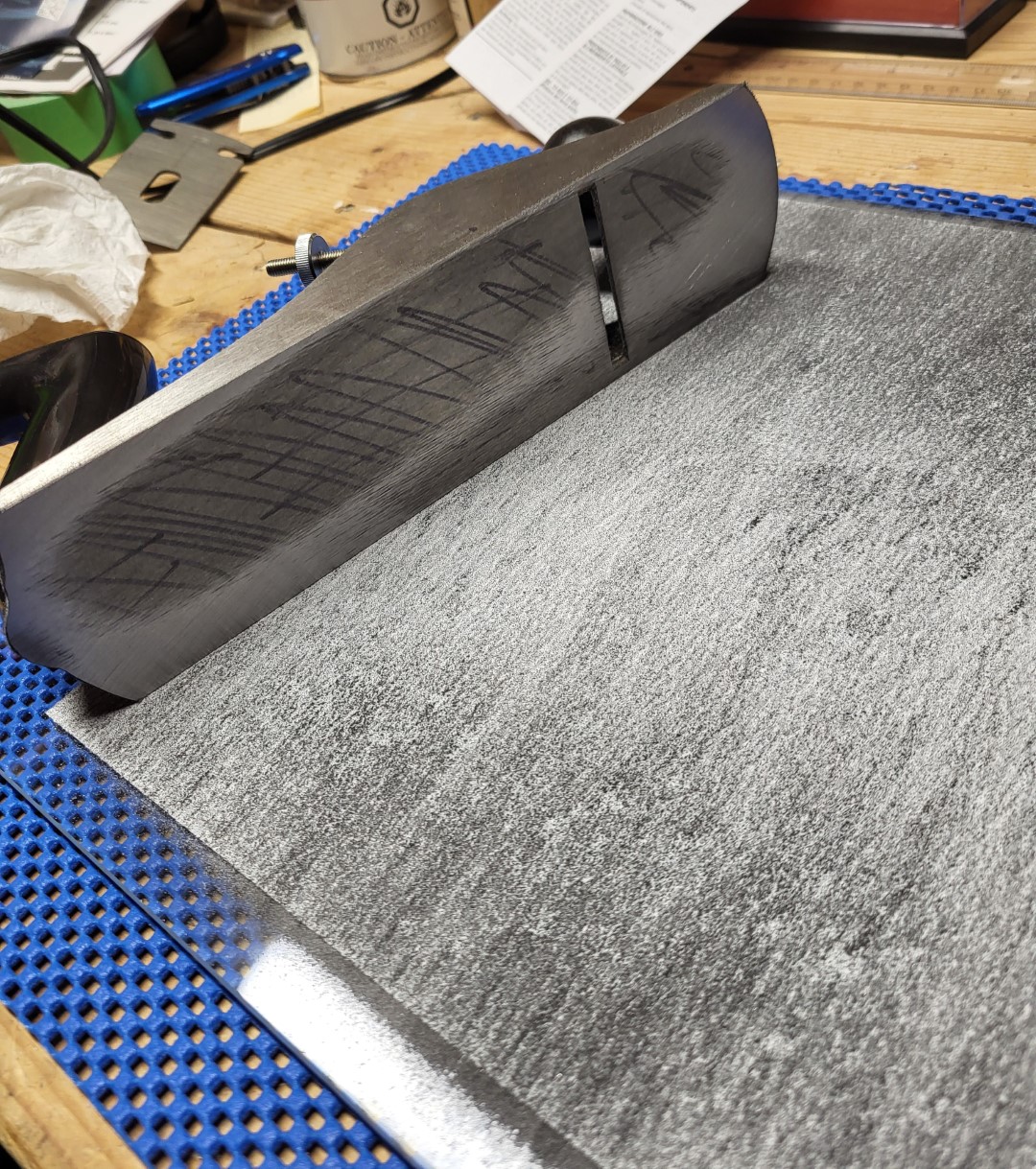
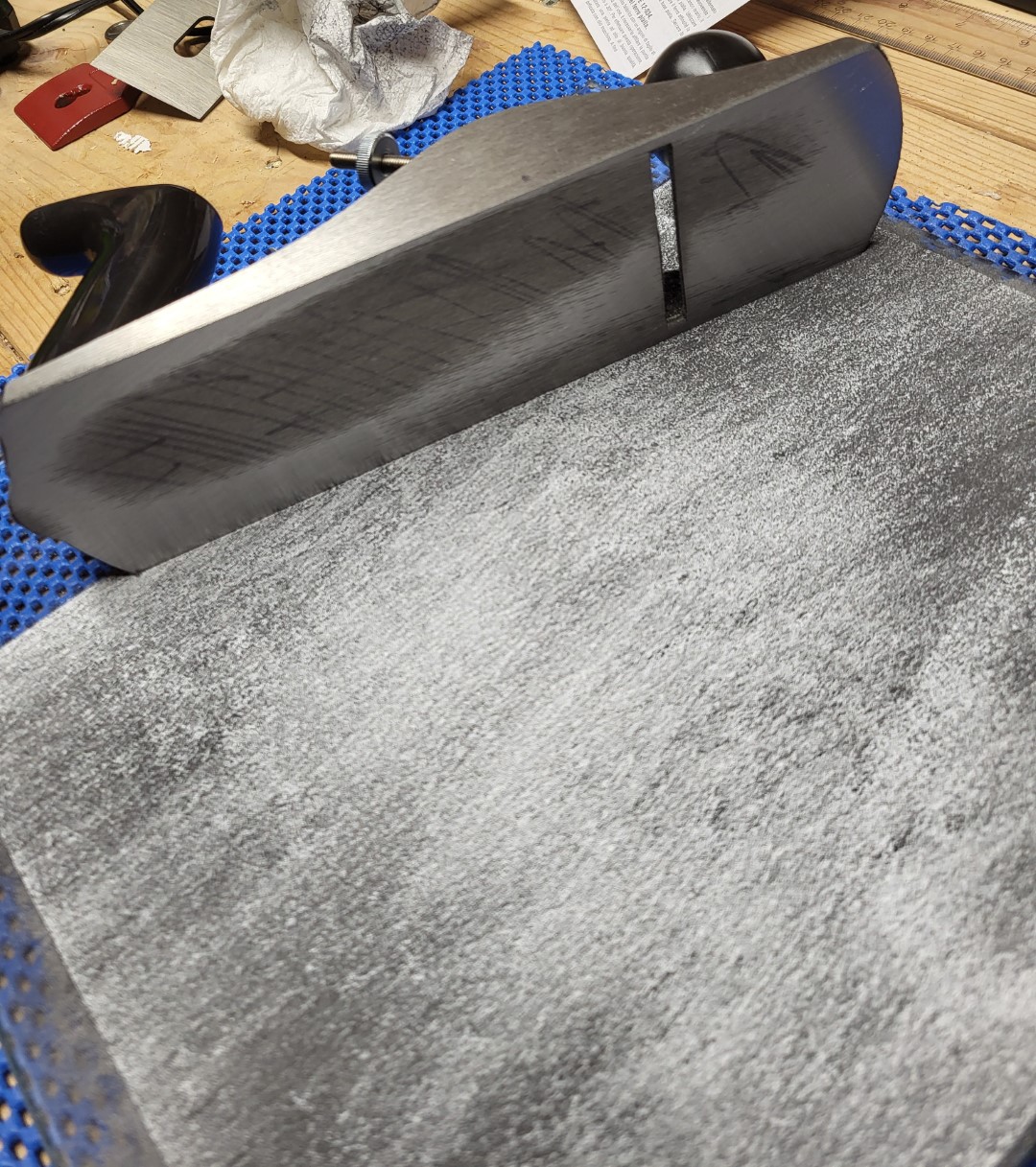
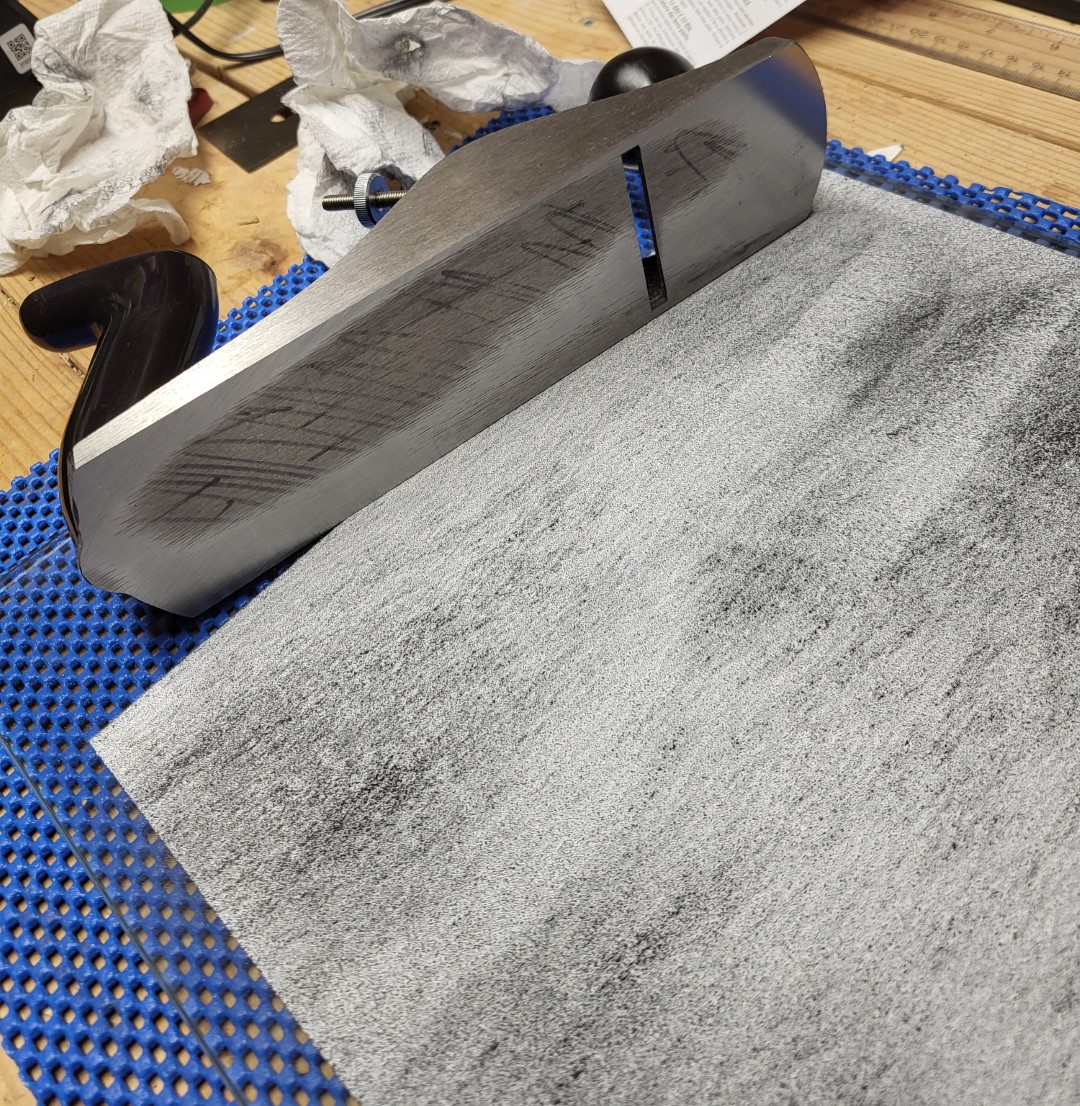
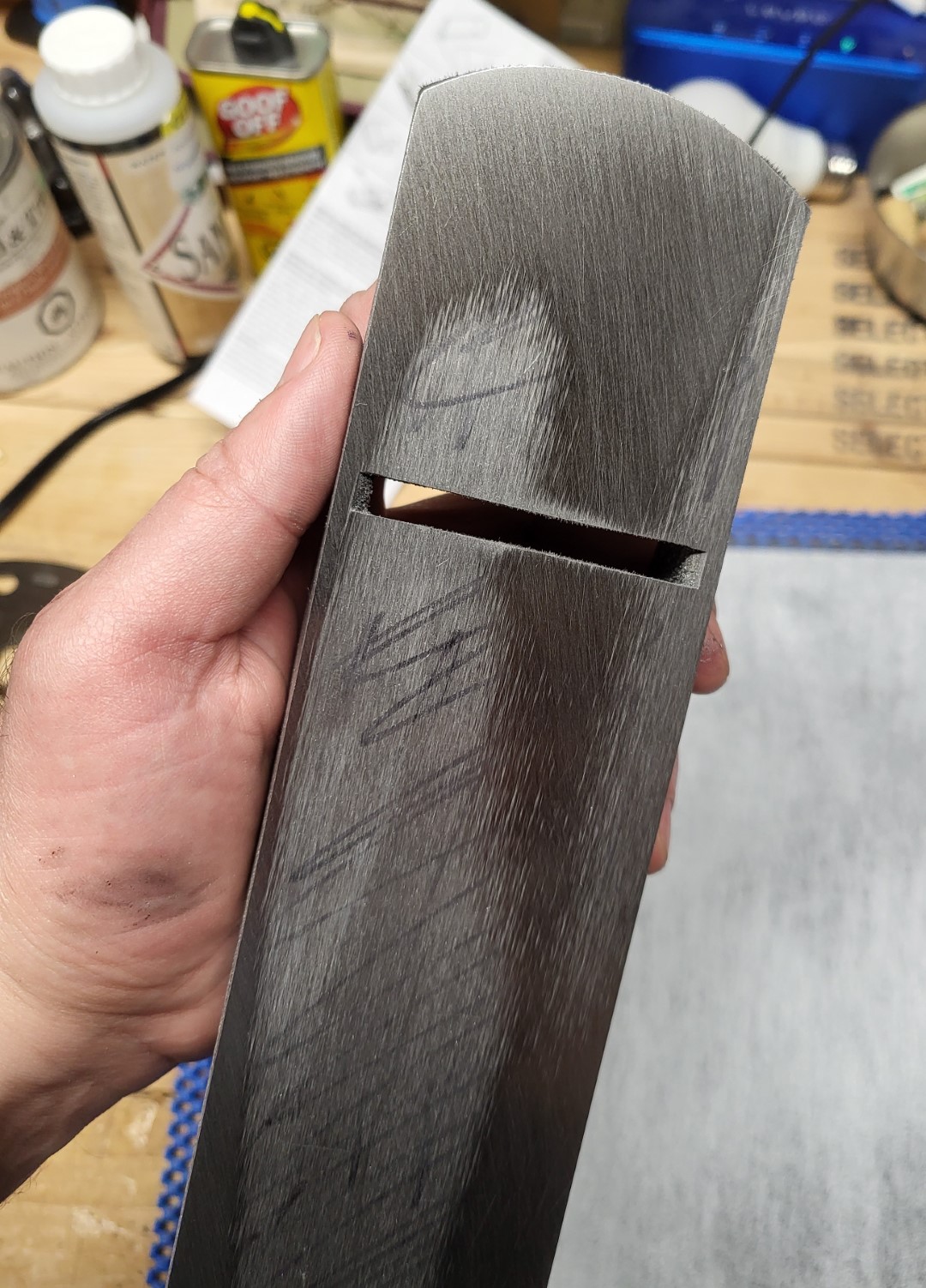
The entire sole doesn't have to be flattened - but all the area at the top (above the blade slot), about an inch behind the blade slot, and the heel (bottom of the sole) should be flat - at the same flat level as each other. This ensures that when you are planing along the wood, you have flat contact at the front, back and where the blade is hitting the wood.
I believe this is where I ended the process - there is still the hollow in the middle-left side, but the important areas are all flat and even with each other, so this should produce some nice clean planing.
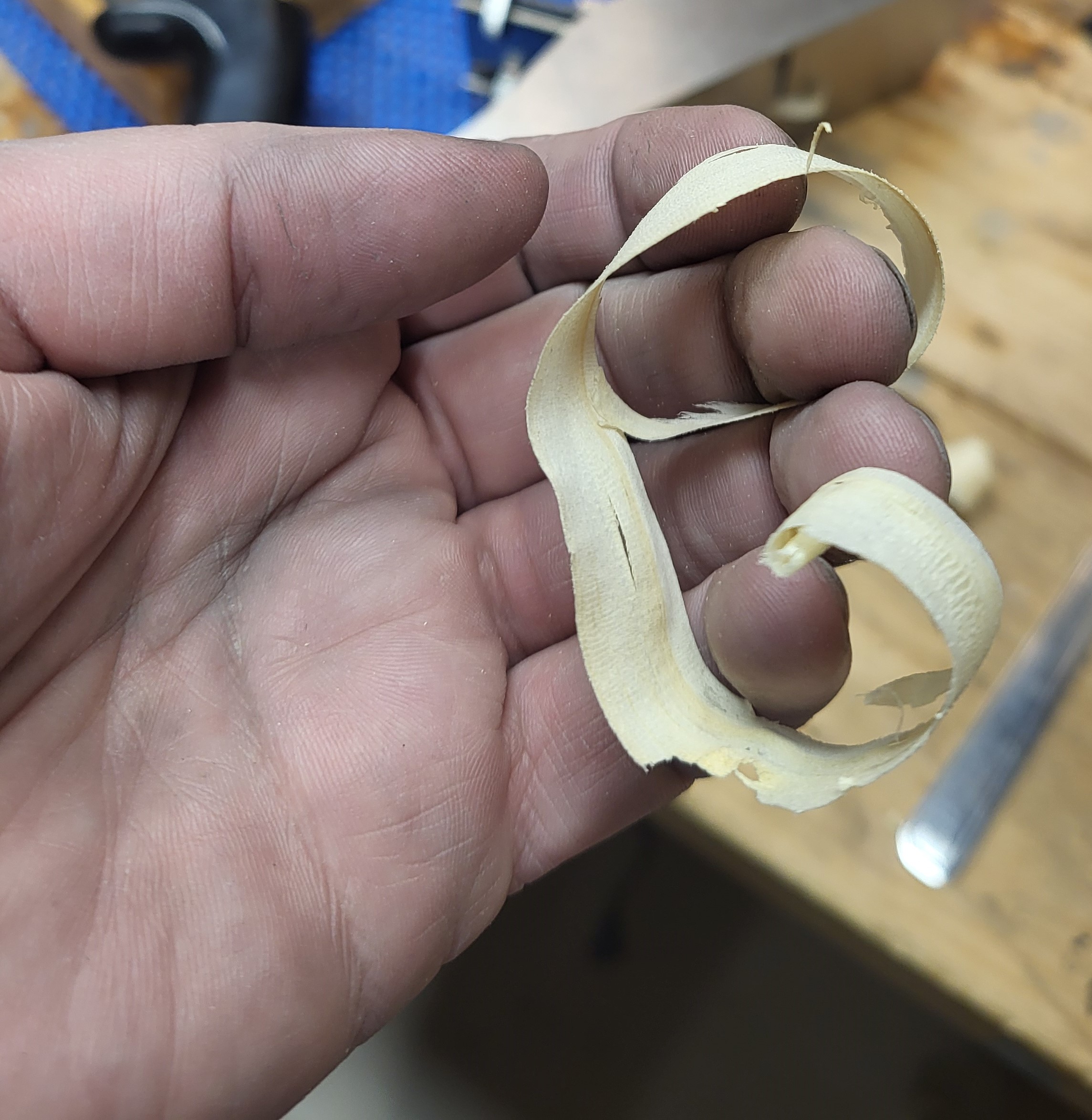
And I will say, when I put the plane all back together and started using it, the results exceeded my expectations by a pretty good stretch. I have been getting some very nice, smooth passes on various pieces of wood, producing curls that I was not expecting.